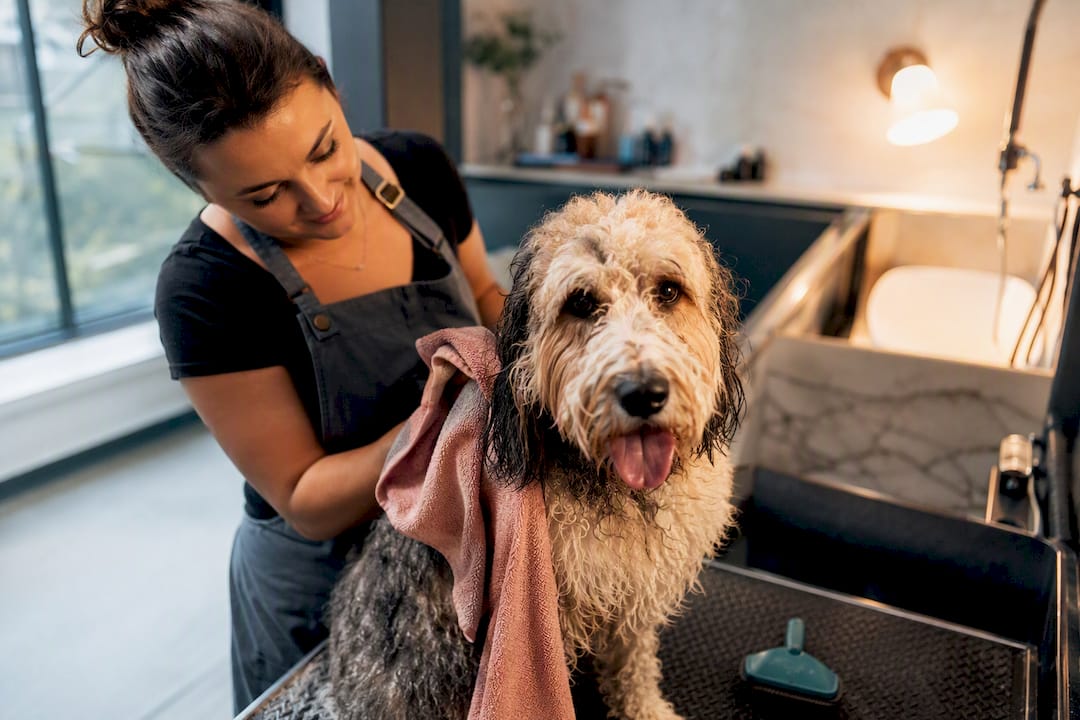

The right Aussiedoodle grooming routine comes down to three habits: brush to the skin several times a week depending on coat texture, bathe every month or two, and see a professional groomer regularly every 6 to 10 weeks. Coat type and generation set the exact frequency. In Gulf Coast humidity, thorough drying matters as much as the brushing itself, since a damp undercoat left to air dry invites mats and skin irritation.
TL;DR:
- Brushing should be done several times a week, with frequency depending on coat type, and a thorough drying process is crucial to prevent mats and skin issues.
- Coat generation predicts texture, with F1b and later generations tending toward curlier and denser coats, which require more frequent grooming and trimming.
- Line brushing from root to tip using a slicker brush and comb is essential for reaching the skin and preventing mats, especially in friction zones like behind the ears and around the collar.
- Bathing schedules vary from monthly to every six weeks depending on coat type, and drying should include brushing to avoid trapped dampness that causes irritation.
- Regular attention to ears, nails, and facial hair, combined with professional grooming every 4 to 10 weeks, helps maintain coat health and prevents matting and other issues.
Table of Contents
- What Coat Type Does Your Aussiedoodle Have, and Why Does It Matter?
- Which Grooming Tools Actually Work on an Aussiedoodle Coat?
- How Do You Line Brush an Aussiedoodle the Right Way?
- How Should You Bathe and Dry an Aussiedoodle?
- Do Aussiedoodle Ears, Nails, and Faces Need Special Attention?
- How Often Should an Aussiedoodle See a Professional Groomer?
- How Do You Prevent and Safely Remove Mats?
- What Happens During the Puppy Coat Transition?
- What Our Cage-Free Approach Teaches Us About Aussiedoodle Coats
- How The Pampered Pup Can Help Your Aussiedoodle
- Sources
- FAQ
What Coat Type Does Your Aussiedoodle Have, and Why Does It Matter?
Every Aussiedoodle falls into one of three coat categories: curly, wavy or fleece, and straight. The difference isn’t cosmetic. It determines how often you need to pick up a brush, and how forgiving your dog’s coat will be if you skip a few days.
Generation predicts texture better than almost anything else. F1 Aussiedoodles (a first-generation cross of an Australian Shepherd and a Poodle) tend to land somewhere in the middle, with coats that vary widely even within the same litter. F1b dogs, bred back to a Poodle, trend curlier and denser, which means more Poodle-like maintenance. F2 and later generations can swing in either direction depending on the specific parents.
Here’s how that plays out at home:
- Curly coat: brush daily; safe clip length is short (one to two inches); mat risk is high, especially behind the ears and under the collar.
- Wavy or fleece coat: brush every two to three days; safe clip length is one and a half to three inches; mat risk is moderate.
- Straight coat: brush two to three times a week; safe clip length can run longer; mat risk is low, though shedding is higher.
Knowing your dog’s category before you buy a single tool saves you money and frustration later.
Which Grooming Tools Actually Work on an Aussiedoodle Coat?
A dense double coat needs specific gear, not whatever brush was on sale.
- Slicker brush: choose one with long, flexible pins that bend slightly under pressure. Stiff, short pins skim the surface and miss the undercoat entirely.
- Metal comb: your quality control tool. If the comb glides through to the skin without snagging, your brushing worked.
- Undercoat rake: best for wavy and straight coats shedding heavily, especially during seasonal blowouts.
- Dematting tool and detangler spray: reserved for small, early tangles. Spray first, then work the tool gently through the mat’s edge.
- High-velocity dryer: forces water out of the coat instead of letting it evaporate slowly, which cuts drying time and reduces the damp conditions that breed mats.
Pro Tip: Test a slicker brush on your own forearm before buying. If it feels scratchy on skin, it’s too firm for a dog’s.
How Do You Line Brush an Aussiedoodle the Right Way?
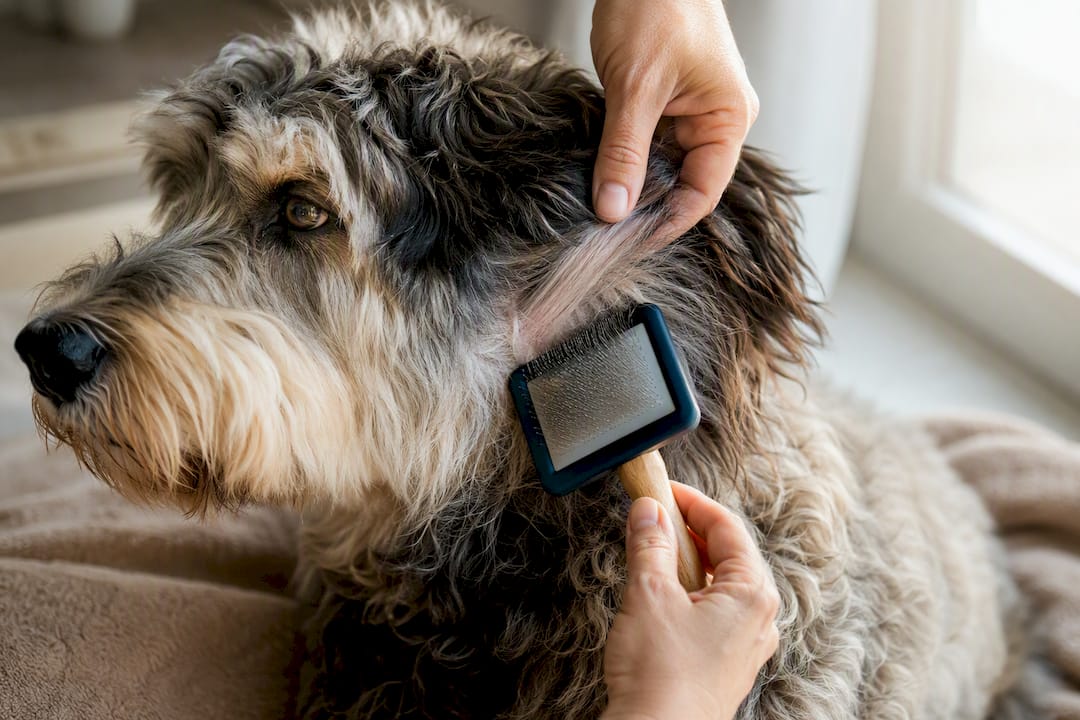
Line brushing is the only method that reliably reaches the skin instead of just smoothing the top coat.
- Settle your dog on a stable surface and let them relax for a minute before starting.
- Spray a light mist of detangler over one small section of coat.
- Part the hair with a comb or your fingers to expose a straight line down to the skin.
- Brush that exposed section from root to tip using the slicker, holding the coat above it out of the way.
- Comb-check the section. If the comb passes through cleanly, move down about an inch and repeat.
- Work systematically across the whole body: legs, chest, belly, and the base of the tail deserve extra attention since friction there causes mats fastest.
This root-to-tip method is what groomers rely on because surface brushing leaves the roots matted while looking tidy on top. A quick maintenance pass on a wavy coat takes about 10 to 15 minutes. A full session on a curly coat, done properly, can take up to 30 to 45 minutes.
Pro Tip: Behind the ears, in the armpits, and around the collar are the first places mats form. Check those four spots even on days you skip a full brush-out.
How Should You Bathe and Dry an Aussiedoodle?
Never bathe over mats. Water tightens tangles and swells the hair shaft, turning a small snarl into a solid knot that’s much harder to remove afterward. Brush thoroughly first, every time.
Bathing cadence follows the same coat logic as brushing:
- Curly coats: bathe roughly every month to month and a half.
- Wavy or fleece coats: bathe about every six weeks.
- Straight coats: bathe about every six to eight weeks, or sooner if needed.
Dense doodle coats that air dry trap dampness against the skin, which leads to mats, hot spots, and irritation. Brush the coat while drying with a high-velocity or blow dryer set on low heat, working section by section until you feel dry skin, not just dry surface hair. After a trip to the beach or a swim in the bay, rinse thoroughly to clear salt and sand before it settles into the undercoat.
Do Aussiedoodle Ears, Nails, and Faces Need Special Attention?
Small weekly tasks prevent bigger problems.
- Check drop ears weekly for odor or redness, and wipe the visible ear gently with a vet-approved cleanser. Ask a groomer or veterinarian about anything beyond routine cleaning.
- Trim or grind nails every three to four weeks. If you hear clicking on hard floors, they’re already too long.
- Tidy facial hair with blunt-tip scissors well away from the eyes. Leave close work around the eye area to a professional groomer who can see what you can’t from your angle.
How Often Should an Aussiedoodle See a Professional Groomer?
Professional visits work alongside home brushing, not instead of it.
- Curly coats: every four to six weeks.
- Wavy coats: every six to eight weeks.
- Straight coats: every eight to ten weeks.
Popular clip choices each carry their own upkeep. A teddy bear cut keeps length around the face and body for that rounded look, but demands the most frequent home brushing to stay mat-free. A puppy cut trims evenly short all over and is the lowest-maintenance option for owners who brush less often. A summer or kennel cut shaves the body close, which is popular through Gulf Coast summers when heat and humidity make longer coats miserable for the dog.
Groomers charge more for doodles than for short-coated breeds because the coat demands two to three times the table time: a full brush-out before clipping, slow section-by-section drying, and scissor finishing. Expect pricing to reflect that extra labor rather than a flat per-dog rate.
How Do You Prevent and Safely Remove Mats?
Mats build in predictable places: behind the ears, in the armpits, around the collar, at the base of the tail, and between the toes. Check those five friction zones every time you handle your dog, even on days you don’t do a full brush-out.
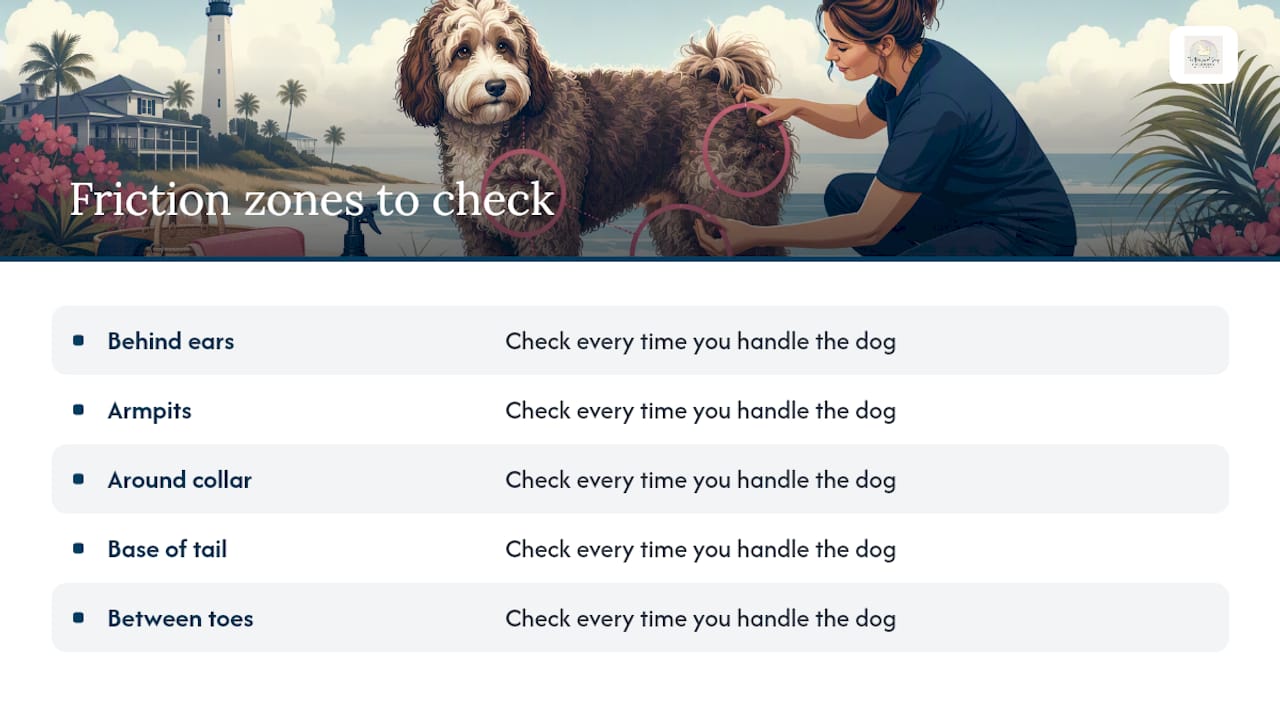
For small, early tangles, spray detangler and work a dematting tool or wide-tooth comb through the mat’s outer edge, gently separating it in small sections. Stop the moment you meet resistance close to the skin.
Never cut a mat out with scissors when it’s pulled tight to the skin. The skin folds into the knot, and a quick snip can cut the dog, not just the hair. A professional shave-down is the safer path once mats reach that stage, and most groomers add a de-matting surcharge to cover the extra time involved. Regular home line brushing between grooms is what keeps you from reaching that point at all.
Pro Tip: If a comb stops moving before it reaches the skin, that’s a mat forming, not just a tangle. Address it that same day.
What Happens During the Puppy Coat Transition?
Somewhere between eight and fourteen months, a puppy’s soft baby coat starts giving way to the denser adult texture. You’ll notice it first behind the ears and along the back, where the new coat feels coarser and tangles more easily than it used to.
- Increase brushing to short daily sessions as soon as you notice the texture shift, even if your dog’s adult coat type normally needs less.
- Comb-check the ears, armpits, and collar area daily during this window, since that’s where transition mats form fastest.
- Build positive associations early: short table time, brief tool touches, and a reward after each calm session.
- Watch for coat changes again after spaying or neutering, since texture can shift a second time and catch owners off guard.
A puppy who learns that brushing is calm and predictable grows into an adult dog who barely notices the brush at all.
What Our Cage-Free Approach Teaches Us About Aussiedoodle Coats
At The Pampered Pup, we groom Aussiedoodles at their own pace, in an open space with no cages and no rushing. Coat texture varies dog to dog, even within the same litter, and our groomers, trained through the Pampered Pup Grooming Academy, adjust brushing and drying accordingly.
Gulf Coast humidity shapes everything we do. We dry thoroughly and check for trapped dampness before any dog leaves our care.
At home, a gentle brush-out before your appointment and a quick note about any recent coat changes help us tailor the groom to your dog.
— Martha Traweek
How The Pampered Pup Can Help Your Aussiedoodle
Between full brushing sessions and bath days, professional support keeps your Aussiedoodle comfortable and mat-free without adding more to your own week. Our breed-specific grooming for doodles means your dog is handled by groomers who understand curly, wavy, and straight coats and adjust technique accordingly, all in a cage-free space where dogs move at their own pace instead of waiting in a kennel.
We offer full grooms, tidy-up trims, bath and brush services, de-shedding treatments, and gentle grooming for puppies, seniors, and sensitive dogs. First-time visitors can start with our $19 Pampered Pup Package to see how your dog settles into our space before committing to a full groom.
Book online or call us at 251-776-2104 to schedule your Aussiedoodle’s next visit, and let us handle the parts of the routine that are easiest to leave to a trained hand.
Sources
- Aussiedoodle breed guide — Petful
- Aussiedoodle grooming: 3 coat types, pro tips & schedules — WoofSpark
- Best Aussiedoodle guide — PoodleGuru
FAQ
Should You Cut an Aussiedoodle’s Hair?
Yes, regular trimming keeps the coat manageable and prevents the kind of dense matting that eventually requires a shave-down. Most owners pair home trims of the paws and face with a professional cut every six to ten weeks depending on coat type.
What Is the Most Popular Haircut for Aussiedoodles?
The teddy bear cut is the most requested style, favored for its rounded, fluffy look around the face and body. The puppy cut and the shorter summer or kennel cut are close runners-up, especially for owners who want lower maintenance or relief from Gulf Coast heat.
How Often Should Aussiedoodles Be Groomed?
Professional grooming typically falls every four to six weeks for curly coats, six to eight weeks for wavy coats, and eight to ten weeks for straighter coats. Home brushing needs to happen far more often, ranging from daily for curly coats to two or three times a week for straight ones.
How Do You Trim an Aussiedoodle’s Face?
Use blunt-tip scissors for small touch-ups well away from the eyes, trimming only what’s clearly loose and overgrown. Close work around the eyes and muzzle is best left to a professional groomer who can see the angle clearly and avoid irritation.
Recommended
- How Often Should You Groom a Doodle? | Doodle Grooming in Mobile, AL
- 5 Ways to Prevent Dog Matting Between Grooms
- Why Grooming Matters for Your Pet’s Well-Being
Want a hand with this? We're a cage-free, pet-paced grooming salon on Oak Circle Drive East in Mobile, AL, with early drop-off from 7:30 AM Tuesday through Friday (8:30 AM Saturday). Book online or call 251-776-2104 and we'll build a plan around your dog.