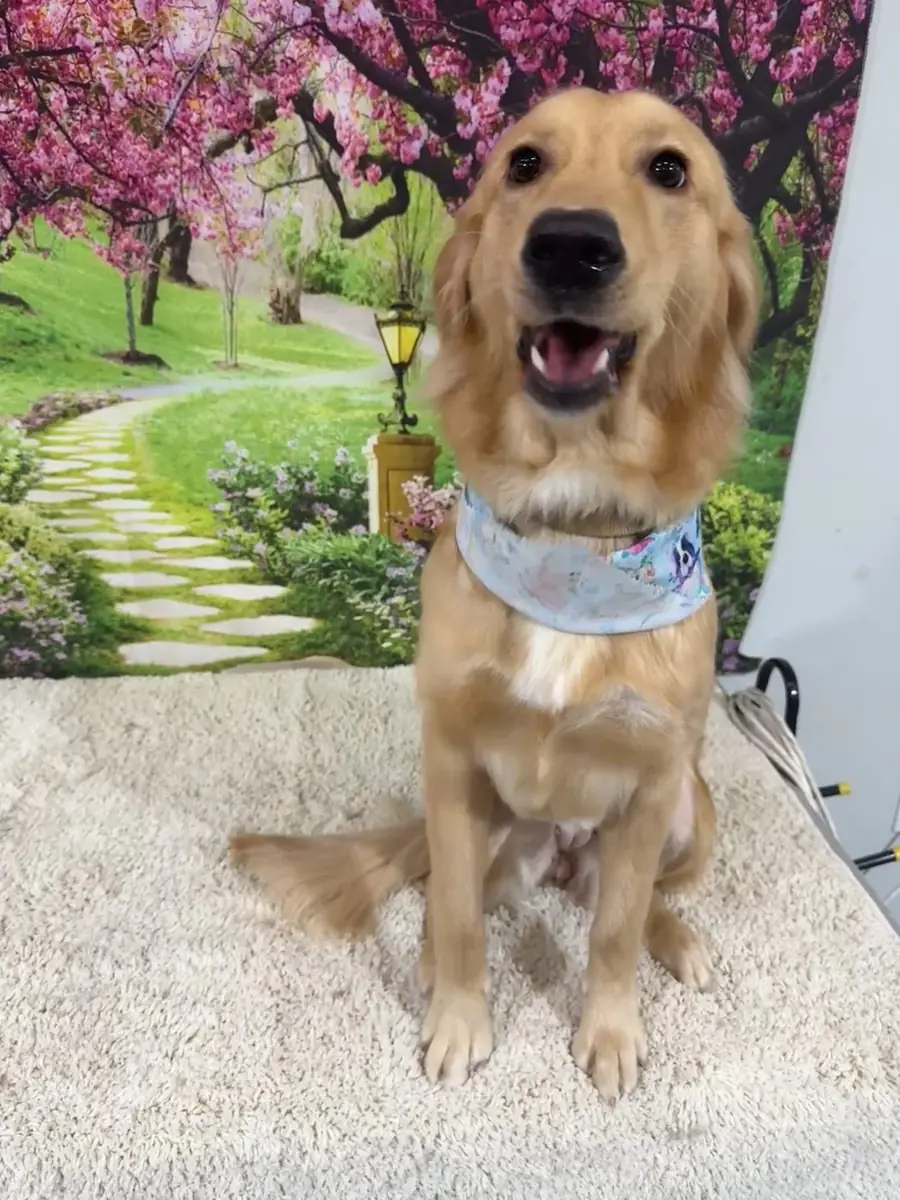
Most people book a groom because their dog looks shaggy. That's a perfectly good reason — but it's the smallest part of what actually happens on the table. A groom is a full-body wellness check, a comfort reset, and for a lot of dogs, a lesson in being handled kindly.
Here's what grooming does for your dog's health that has nothing to do with how cute the bow is.
1. Skin and coat health starts under the fluff
A coat isn't decoration. It insulates, it shields skin from sun and abrasion, and it depends on airflow to work. When dead hair and dander stay trapped in it, that whole system stops functioning. A proper bath and blow-out does three things at once:
- Removes dead hair and dander. Shed hair that stays in the coat is the raw material of mats, and it holds dirt and allergens against the skin.
- Redistributes natural oils. Brushing draws sebum from the skin down the length of the hair, which is what gives a healthy coat its softness and shine. No product replicates it.
- Stimulates circulation. The massage of a real shampoo and a thorough brush-out brings blood flow to the skin, which supports healthy hair growth.
It also gives us a clear look at skin we'd otherwise never see: dryness, flaking, redness between the toes, thinning patches along the flanks. Those are the early pages of a story you'd much rather read at week one than week ten.
2. Groomers often notice things first
We put hands on every square inch of your dog, slowly, every four to eight weeks. Vets do a wonderful job in a fifteen-minute exam; we simply have more time and closer contact. Things groomers routinely flag:
- New lumps, bumps, and cysts — especially small ones hidden under coat, where you'd never feel them through a pat on the back.
- Hot spots and irritated skin — often the first sign of allergies, fleas, or moisture trapped in a damp coat.
- Ear trouble — odor, dark discharge, or a dog who pulls away when we get near an ear. Floppy-eared breeds in a humid climate are prime candidates.
- Dental concerns — heavy tartar, red gums, or a smell that goes beyond ordinary dog breath.
- Fleas, ticks, and flea dirt — sometimes visible only once a coat is wet and parted.
- Nail and paw pad problems — cracked pads, split nails, interdigital sores, grass seed lodged between the toes.
We're not veterinarians and we'll never diagnose. But we will tell you plainly what we found and where, so you can decide whether it's worth a call to your vet. Half the time it's nothing. The other half, catching it early kept it small.
3. Physical comfort is the quiet one
Dogs are stoic about slow-building discomfort. They don't complain about a matted armpit or a nail curling into a pad — they just adjust, and we read the adjustment as "getting older."
- Matting genuinely hurts. Mats anchor to living hair and pull with every step and stretch. Tight to the skin, they cut off airflow, trap moisture, and set up sores and infection underneath.
- Overgrown nails change how a dog stands. When nails hit the floor first, weight shifts backward off the pads. Over months that altered posture loads wrists, elbows, and hips — a real issue for seniors and for dogs already managing arthritis.
- Clean, dry ears stay healthy ears. Removing excess hair and moisture from the ear canal area is one of the simplest ways to head off infections.
- Sanitary and paw trims prevent everyday misery. Hair between the pads makes tile floors slippery; a tidy sanitary area prevents irritation.
None of these are cosmetic. They're the difference between a dog who moves freely and one quietly guarding something.
4. On the Gulf Coast, coat care is heat care
Mobile summers ask a lot of a dog. Heat and humidity together mean the panting that normally cools them works far less efficiently, and a coat clogged with dead undercoat behaves like a blanket rather than insulation.
This is where deshedding earns its keep. Pulling loose undercoat out of a Golden, a Husky, a Shepherd, or a shedding-type doodle restores the airflow that lets the coat do its job — trapping cooler air near the skin and reflecting sun off the top. It's also why we rarely recommend shaving a double-coated dog for summer: it removes the protective outer layer, exposes skin to sunburn, and the undercoat often grows back patchy.
What tends to work well here between May and September:
- A bath and full blow-out more often through the humid months — clean, thoroughly dried coat, no damp undercoat sitting against skin.
- A deshedding treatment in late spring and again mid-summer for heavy shedders.
- A tidy-up between full grooms to keep feet, face, and sanitary areas clean when your dog is in and out of sprinklers, the bay, and wet grass.
5. Emotional well-being counts as health
A dog who spends grooming day frightened is paying a physical price for it — elevated heart rate, cortisol, muscle tension, sometimes a stomach upset that lasts into the evening. Repeat that every six weeks and grooming becomes something they brace for.
It doesn't have to go that way. This is the whole reason we're cage-free and pet-paced: dogs rest in an open, supervised space between steps instead of waiting in a kennel, and we work at the speed the dog in front of us can handle. If a nervous dog needs to stop, sniff around, and try the dryer again in five minutes, that's fine. Cooperation over control, every time.
For anxious dogs, seniors, and puppies this matters enormously. A groom that ends calmly teaches your dog that being lifted, held, brushed, and touched around the paws and face is safe. That learning transfers — to vet exams, to nail trims at home, to being examined when something's actually wrong.
6. Routine is the ingredient people underestimate
The real benefit of grooming isn't any single appointment. It's the rhythm.
A regular schedule means we know what your dog's skin normally looks like, so a change stands out. It means mats never get the head start they need to become a problem. It means your dog knows the place, the people, and the sequence — and familiarity is the strongest calming tool there is. And it means you're handling your dog gently at home between visits, which is quietly one of the best relationship-builders available.
Grooming, done kindly, is preventive care that happens to leave your dog looking wonderful. The haircut is the part your neighbors notice. Everything underneath is the part that lets your dog feel good in their own coat — and that's the whole point.
Want a hand with this? We're a cage-free, pet-paced grooming salon on Oak Circle Drive East in Mobile, AL, with early drop-off from 7:30 AM Tuesday through Friday (8:30 AM Saturday). Book online or call 251-776-2104 and we'll build a plan around your dog.