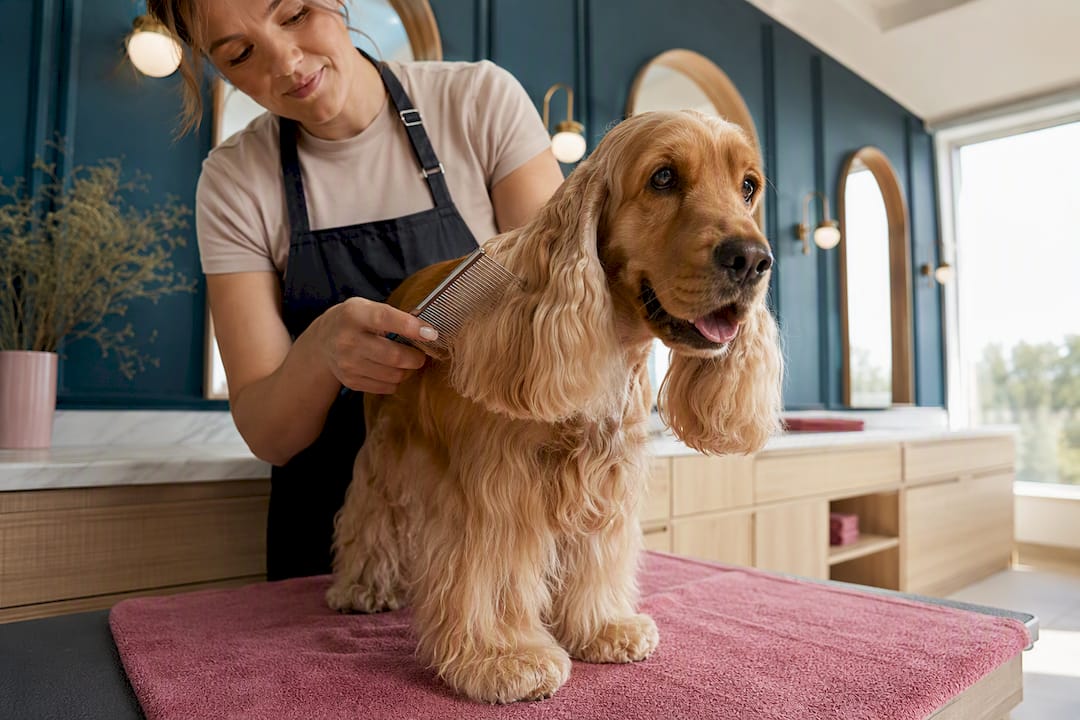

A healthy Cocker Spaniel coat needs a weekly brush, a bath every four to six weeks, and a tidy trim or professional groom every six to eight weeks. Choose a puppy cut if low maintenance matters most, or a breed-standard clip if you love the classic silhouette and can commit to brushing three or four times a week. Call in a professional the moment you find a mat you cannot gently work loose, notice ear odor, or want hand-stripping done right. The Pampered Pup offers exactly this kind of cage free, pet paced groom for Cocker families who want expert hands at the ready.
TL;DR:
- Regular brushing twice a week helps prevent mats and keeps the coat healthy, especially in humid or saltwater conditions that speed up tangling and damage.
- Clipping is the most practical grooming method for most families, while hand-stripping offers better coat texture and color preservation for show or field dogs.
- Ear checks and thorough drying after swimming are critical to prevent infections, with professional help needed for persistent odor, irritations, or heavy mats.
- Most Cocker Spaniels benefit from professional grooming every six to eight weeks, with increased frequency advised for those prone to mats, ear issues, or regular water activities.
Table of Contents
- How the Cocker Coat and Ears Shape Your Grooming Routine
- Essential Tools and Supplies for At-Home Grooming
- How Do You Groom a Cocker Spaniel Step by Step at Home?
- Popular Cocker Haircuts and What Each One Costs You in Upkeep
- Should You Clip or Hand-Strip Your Cocker Spaniel?
- Dealing With Mats, Burrs, and Emergency Tangles
- When to See a Professional and How The Pampered Pup Helps Cockers
- Building a Grooming Schedule That Actually Works
- Why the Real Work Happens Between Grooms, Not During Them
- Book a Gentle, Breed-Aware Groom With The Pampered Pup
- Sources
- FAQ
How the Cocker Coat and Ears Shape Your Grooming Routine
Cocker Spaniels carry a silky topcoat with soft feathering along the legs, belly, and ears, a coat built for a hunting dog but demanding for a family pet. The American Kennel Club notes that this feathering mats quickly, and the breed’s floppy ears trap moisture in a way that makes ear infections a real and recurring concern. Understanding why the coat behaves this way makes every step that follows easier.
American and English Cocker Spaniels are the same breed at heart, but their coats differ enough to change your weekly workload. American Cockers tend to carry heavier, longer feathering on the chest, legs, and ears, which means more brushing time and a higher chance of matting behind the ears and under the front legs. English Cockers usually have a slightly shorter, less profuse coat, so a quick daily pass often replaces the longer sessions an American Cocker needs.
Three areas deserve special attention on every Cocker, regardless of type:
- Feathering on the legs and belly picks up debris, sand, and moisture on every walk and mats fastest where fur rubs together.
- The skirt, the longer fringe along the sides and underside, tangles easily and hides mats close to the skin where you cannot see them.
- The ears stay warm, dark, and damp under that soft leather, which is exactly the environment infections prefer.
Gulf Coast weather adds its own layer of difficulty. Humidity keeps a damp coat from drying fully, which locks moisture against the skin and speeds up mat formation. Salt water at the beach dries out the coat and skin, leaving fur brittle and prone to breaking. Sand works its way deep into feathering and behind the ears, where it acts almost like sandpaper against tangled fur. If your Cocker spends afternoons at the beach or the bay, plan on a more thorough dry and a closer ear check every single time, not just after the occasional swim.
Essential Tools and Supplies for At-Home Grooming
The right tools make the difference between a calm ten-minute brushing session and a wrestling match. A basic Cocker Spaniel grooming kit does not need to be extensive, but it does need to cover a few specific jobs.
Start with three brushes and combs:
- A slicker brush works through the topcoat and feathering to lift loose hair and catch early tangles before they tighten into mats.
- A pin brush is gentler on sensitive areas like the ears and belly, useful for daily touch-ups once the coat is already smooth.
- A metal comb with both wide and narrow teeth checks your work; if the comb glides through cleanly, the coat is truly detangled, not just brushed on the surface.
Beyond brushes, a few specialty items solve specific problems. A detangling spray softens knots before you touch them with a brush, which spares the skin underneath. A de-shedding tool pulls out loose undercoat during Alabama’s long shedding season, and a mat splitter or a pair of blunt-tipped grooming shears handles mats that a comb alone cannot manage. Save clippers for mats only when detangling has genuinely failed. If you do use clippers on the body, guard lengths between a half inch and one full inch keep the coat manageable without cutting it too close, matching the puppy and kennel clip lengths most grooming professionals recommend for easy upkeep.
Round out the kit with nail trimmers or a grinder, a gentle dog-specific ear cleaner, and a low-heat dryer designed for pets rather than people. Human hair dryers run too hot for a dog’s skin and can cause real discomfort. Choose a shampoo and conditioner formulated for dogs, since human products strip natural oils your Cocker’s skin needs, especially after salt water exposure has already worked against that balance.

Pro Tip: Keep a small spray bottle of water and leave-in conditioner mixed together near your grooming spot. A quick mist before brushing softens the coat and makes tangles far easier to work through, especially on humid Gulf Coast days when the coat feels drier than it looks.
How Do You Groom a Cocker Spaniel Step by Step at Home?
A full at-home grooming session, done properly, moves through several stages in order. Skipping ahead, especially bathing before brushing, is a common mistake that can lead to matting.
- Pre-brush and health check. Before any water touches your Cocker, run your hands over the whole body, checking the skin for redness, bumps, or flea dirt, and gently working through the feathering with a slicker brush. Take a moment to smell each ear; a clean ear has almost no odor, while a yeasty or sour smell is your first sign something needs attention before you bathe.
- Bathe thoroughly. Wet the coat completely with lukewarm water, working from the neck back. Place a cotton ball just inside each ear opening to keep water out, then massage in a dog shampoo, paying close attention to the feathering, the sanitary area, and the paws, where sand and salt residue collect. Rinse until the water runs completely clear; leftover shampoo is a common cause of itchy, flaky skin later in the week.
- Condition where it counts. A light conditioner on the feathering and skirt makes the drying and brushing stages noticeably easier, particularly if your Cocker has been swimming and the coat feels rough or stripped.
- Dry in two stages. Towel off as much moisture as possible first, then finish with a low-heat pet dryer while brushing the coat in the direction of growth. This combination prevents the coat from drying into tangles, which happens easily if you let feathering air dry on its own. Check inside each ear with a soft, dry cloth as part of this stage; ears must be fully dry before your Cocker goes back outside.
- Brush by zone. Work through the body first with a slicker brush, then move to the ears, legs, and skirt with a pin brush, finishing each section with a metal comb to confirm no hidden mats remain. If you plan to trim the face or sanitary area with scissors, keep the blades pointed away from the skin and trim small amounts at a time rather than one large cut.
- Trim nails and finish ears. Clip just the tip of each nail, avoiding the pink quick, and stop immediately if you see any dark line inside a light-colored nail, since that marks where the quick begins. Give the ears one more dry pass and a light cleaning if your dog has been swimming or if the pre-check earlier revealed any odor.
- Final once-over. Run the comb through the whole coat one last time and check paws, the tail, and behind the ears for anything missed.
A quick brush-and-check session takes about five to ten minutes. A full bath, dry, and brush routine typically runs sixty to ninety minutes depending on coat condition and how cooperative your Cocker feels that day. Ear infections rank high among Cocker Spaniel health concerns, which is exactly why the drying step deserves more patience than owners usually give it.
Stop and call a professional if you find a mat that will not loosen with conditioner and a comb, if the skin underneath looks red or irritated, or if an ear smells off even after cleaning. These are not moments for a heavier hand with the scissors; they are moments for The Pampered Pup.
Popular Cocker Haircuts and What Each One Costs You in Upkeep
The right haircut is really a maintenance decision dressed up as a style choice. Every Cocker cut trades some appearance for some convenience, and knowing that trade-off up front saves owners from picking a look they cannot keep up with.
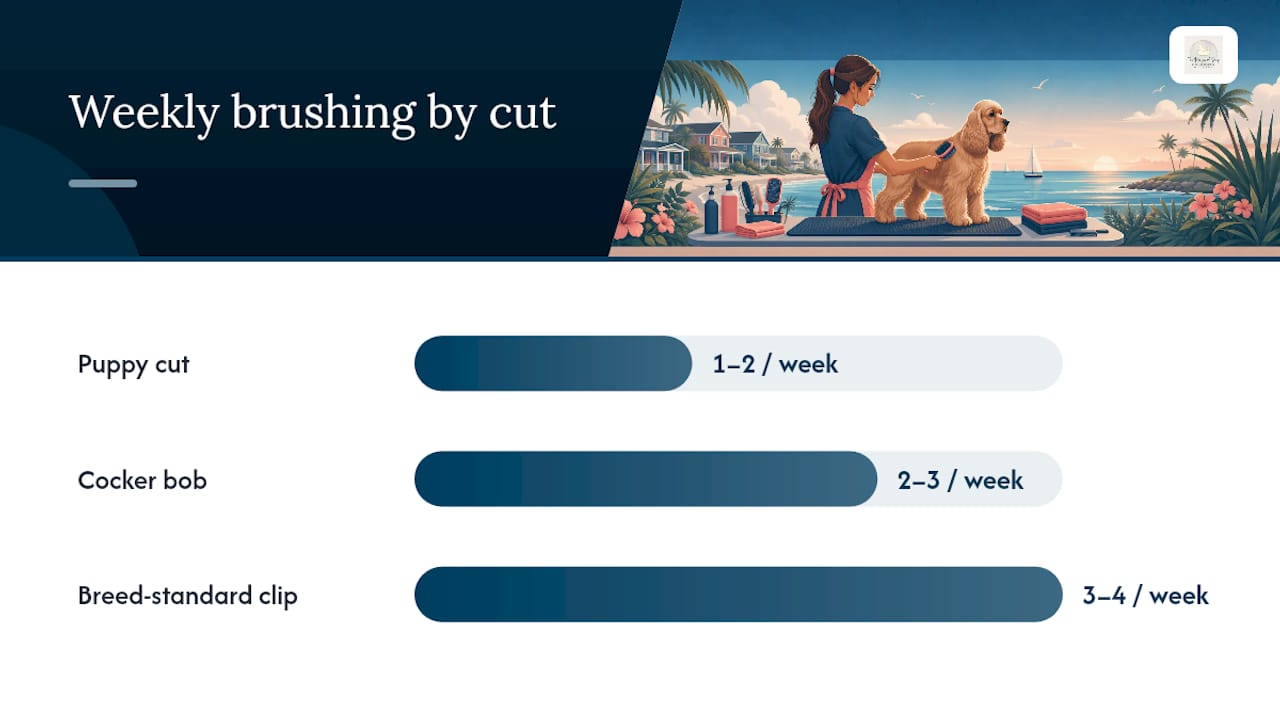
- The puppy cut keeps the coat trimmed to a uniform, shorter length all over, which cuts brushing down to about once or twice a week and makes it the easiest option for first-time owners or busy households.
- The breed-standard clip preserves the longer feathering and classic silhouette Cockers are known for in the show ring, but it demands brushing three to four times a week and a professional trim every four to six weeks to keep that shape looking intentional rather than overgrown.
- The summer or field cut shortens the coat further than a puppy cut, a smart choice for dogs that swim often or spend most days outside in the heat, since less coat means faster drying and fewer places for sand and moisture to hide.
- The cocker bob trims the skirt to a shorter, rounded length while keeping some breed character, landing between the puppy cut and the full breed standard in both looks and upkeep.
Guard lengths in a short range typically produce the puppy cut look, while a somewhat shorter length leads to a summer cut style. The shorter you go, the less feathering exists to trap moisture around the ears, which is a genuine advantage for dogs prone to infections or for owners managing frequent swims.
An honest note on style choice: many owners default to the puppy cut simply because it sounds easier, and for most households it genuinely is. But if you love the elegant look of a full breed-standard coat and are realistic about committing to several brushing sessions a week, that classic silhouette rewards the effort with a coat that photographs beautifully and moves the way Cockers were bred to move. The choice comes down to how much brushing time you can honestly promise, not which style looks nicer in a photo.
Should You Clip or Hand-Strip Your Cocker Spaniel?
Clipping is faster, gentler on most pets, and the practical choice for the overwhelming majority of Cocker owners. Hand-stripping preserves coat texture and depth of color better than clipping ever will, but it is specialist work best reserved for dogs in the show ring or owners with real patience and a skilled professional on call.
Hand-stripping involves plucking dead hairs from the coat rather than cutting them, which keeps the wiry guard hair structure intact and maintains richer color over time. Sessions typically happen every eight to twelve weeks and can take one to two hours depending on how dense the coat is. It takes real skill to do without discomfort to the dog, and it is not something most owners should attempt at home without training.
Clipping, by contrast, is quick, widely available, and far more forgiving of a learning curve. The trade-off shows up gradually: repeated clipping tends to soften coat texture and can dull the vibrancy of color compared to a hand-stripped coat, since clipping cuts the hair shaft rather than removing it at the root.
So how should you decide? A few questions cut through the noise quickly:
- Are you showing your dog or maintaining a working field coat? Hand-stripping serves those goals better.
- Does your dog have sensitive skin? Clipping is generally the gentler option for skin that reacts to repeated handling.
- Do you have access to a groomer trained in hand-stripping? Not every professional offers it, and it is not a technique to learn casually at home.
- How much time can you realistically commit? Hand-stripping sessions run longer and happen less often, but each one demands more from both dog and groomer.
For the vast majority of Cocker families along the Gulf Coast, regular clipping paired with diligent home brushing keeps the coat healthy, comfortable, and manageable, and it is the approach The Pampered Pup recommends for pets whose job is simply being a beloved family member.
Dealing With Mats, Burrs, and Emergency Tangles
Mats move fast, and moisture is almost always the accelerant. On an active Cocker who swims, plays outside, or simply skips a few days of brushing, mats can form in as little as forty-eight to seventy-two hours, tightening close to the skin where they trap dirt and moisture and set the stage for irritation underneath.
When you find a mat, resist the urge to grab scissors right away. Follow a careful sequence instead:
- Isolate the mat by holding the coat above it flat against your palm, which protects the skin from any accidental pull or nick.
- Work in detangling spray or leave-in conditioner, letting it sit for a minute or two to soften the tangled fur before you touch it with a comb.
- Comb from the outer edge inward, using short strokes and a wide-toothed comb first, switching to a finer comb only once the mat has loosened.
- Reach for scissors or a mat splitter only as a last resort, and only if you can see clear daylight between the mat and the skin; cutting blind is how accidental nicks happen.
- Check the area afterward for redness or tenderness, since a mat that has been sitting against the skin for days can leave the skin underneath irritated even after the fur is clear.
Never yank a mat straight out or attempt to cut it flush against the skin with your Cocker squirming. That combination is exactly how accidental skin nicks happen, and a startled dog makes any grooming task riskier.
Pro Tip: If a mat feels tight and close to the skin rather than loose and fluffy, stop trying to work it out yourself. A mat that has compacted this far usually needs a professional reset cut, and forcing it can cause more discomfort than the mat itself.
Some mats are simply beyond a safe at-home fix. Widespread matting across the body, mats hidden deep in the skirt or behind the ears, or any mat that seems to be pulling at the skin all call for professional hands. That is exactly the kind of situation The Pampered Pup handles every week, gently and without rushing your dog.
When to See a Professional and How The Pampered Pup Helps Cockers
Some grooming moments are simply better handled by trained hands. Heavy matting that home detangling cannot resolve, hand-stripping for owners who want that show-quality texture, chronic ear odor or irritation, and anxious or senior dogs who need extra patience are all clear signals it is time to book a professional groom.
The Pampered Pup was built around exactly this need. Every appointment happens cage-free, at your Cocker’s own pace, in an open and supervised space with no kennels and no rushing. A visit typically includes a consultation about the cut you have in mind, a full skin and ear check, a tailored trim specification based on your dog’s coat and comfort, and a de-shedding treatment when the season calls for it.
Founder Martha Traweek brings that same unhurried, breed-aware philosophy to every groom, and it carries through to The Pampered Pup Grooming Academy, where new groomers apprentice under the same gentle, pet-paced standards. For families whose Cockers need specialized handling, our breed-specific grooming approach is built around exactly this kind of individual attention.
Before your appointment, a little preparation goes a long way:
- Brush out any loose tangles you can safely reach at home so the appointment can focus on shaping rather than untangling.
- Note any recent skin, ear, or behavior changes so we can watch for them during the groom.
- Bring your Cocker on an empty-ish stomach and after a bathroom break, which helps most dogs settle in more easily.
If your Cocker is a puppy having a first groom or a senior dog who needs a gentler touch, mention that when you book so we can plan the pace accordingly.
Building a Grooming Schedule That Actually Works
A simple weekly and monthly rhythm keeps most Cocker coats in genuinely good shape without turning grooming into a daily chore. Brush two to four times a week depending on your dog’s coat length and style, check ears weekly for odor or debris, trim the fur around the paw pads as needed to prevent slipping and tracking in debris, and give the face a quick sanitary tidy between full grooms.
On the monthly side, plan a full bath every four to six weeks, a nail trim every three to four weeks, and a professional trim or full groom every six to eight weeks. That rhythm holds steady through most of the year but shifts during Gulf Coast summers and for any Cocker who swims regularly. After every swim or beach trip, dry the ears completely and run a comb through the feathering to catch sand and salt before they dry into the coat and set into mats.
Even a solid routine runs into occasional trouble, and knowing the fix matters as much as knowing the schedule.
- Persistent ear odor that lingers after cleaning suggests an infection brewing beneath the surface and calls for a veterinary visit rather than a stronger cleaning at home.
- Mats that keep reappearing in the same spot, usually behind the ears or under the front legs, often mean that area needs a shorter clip length or more frequent attention between grooms.
- Skin redness or flaking after a bath can point to shampoo residue left behind during rinsing, or occasionally a sign of skin sensitivity worth mentioning to your vet.
A predictable rhythm like this is also simply kinder to your Cocker. Dogs settle into routines, and a coat that never gets the chance to mat heavily is a coat that never needs an uncomfortable de-matting session at all.
Why the Real Work Happens Between Grooms, Not During Them
Most grooming advice treats the professional appointment as the main event and the days in between as an afterthought. That gets the priority backward. A Cocker Spaniel’s coat is won or lost in the small, unglamorous moments between visits: the two minutes of ear-checking after a swim, the quick comb-through before a mat has a chance to set.
The conventional wisdom oversells clipper guards and haircut styles as the deciding factor in coat health. They matter, but a breed-standard clip on a dog who gets brushed twice a week will mat faster than a puppy cut on a dog who gets brushed daily. Consistency beats the fanciest cut every time.
If you take one thing from this guide, let it be this: prioritize the weekly ear check and the post-swim dry before you agonize over which haircut looks best. Get that habit locked in, and nearly every other grooming problem becomes smaller and rarer. The style choice matters far less once the fundamentals are handled.
— Martha Traweek
Book a Gentle, Breed-Aware Groom With The Pampered Pup
Home care goes a long way, but every Cocker deserves an expert set of hands checking in on their coat and ears. The Pampered Pup offers full grooms, tidy-up trims, and de-shedding treatments designed around exactly the feathering and ear challenges this breed brings, along with gentle puppy first grooms and senior and sensitive-dog grooming for the Cockers who need a slower pace. First-time visitors can also try our $19 Pampered Pup Package, a low-pressure way to introduce your dog to our cage-free space before committing to a full groom.
Because we groom cage-free and at each dog’s own pace, anxious or sensitive Cockers who struggle in a kenneled setting often relax noticeably faster with us, without the stress that traditional grooming environments can create. Explore our full lineup of dog grooming services to see what fits your Cocker best, then book online or call 251-776-2104 to reserve a spot. We are proud to serve families throughout Mobile, Daphne, Spanish Fort, and Fairhope, with early drop-off available starting at 7:30 AM Tuesday through Friday and 8:30 AM on Saturdays.
Sources
The breed facts in this guide, including coat structure and ear-infection risk, come from the American Kennel Club’s Cocker Spaniel profile, the definitive reference for breed standards and characteristics. Haircut styles and clipper guard guidance draw on GroomBoard’s breakdown of Cocker Spaniel haircuts and the 2026 dog grooming style report from Groomers Online.
Practical frequency guidance, including bathing and mat-formation timelines, comes from Just Spaniels’ grooming frequency guide, while the clip-versus-hand-strip comparison pulls from Just Spaniels’ dedicated article on the topic and a supporting piece from Hackney Barkers on coat texture effects. Owners looking for appointment logistics and general groomer booking guidance can also reference Animal Booking’s dog groomer resources.
- The 2026 dog grooming style report: trends, data and viral cuts
- Cocker Spaniel dog breed information | AKC
- Should you clip or hand strip a Cocker Spaniel? | Just Spaniels
- Cocker Spaniel haircuts: 8 styles from breed clip to bob | GroomBoard
FAQ
What is the best haircut for a Cocker Spaniel?
The best haircut depends on your maintenance capacity: the puppy cut suits owners who want easy upkeep with brushing once or twice weekly, while the breed-standard clip suits owners who love the classic look and can commit to brushing three to four times a week.
What are the grooming needs of a Cocker Spaniel?
A Cocker Spaniel needs weekly brushing, a bath every four to six weeks, weekly ear checks and drying, regular nail trims, and a professional trim every six to eight weeks to manage its feathering and prevent mats.
Are Cocker Spaniels difficult to groom?
Cocker Spaniels require more consistent grooming than short-coated breeds because their feathering mats quickly and their floppy ears trap moisture, but a steady weekly routine makes the work manageable rather than difficult.
Should you hand-strip or clip a Cocker Spaniel?
Clipping is faster and generally gentler, making it the right choice for most family pets, while hand-stripping preserves coat texture and color and suits show or field dogs whose owners have access to a skilled professional.
How often should I book a professional groom for my Cocker Spaniel?
Most Cocker Spaniels do well with a professional trim or full groom every six to eight weeks, with more frequent visits recommended for dogs prone to matting, chronic ear issues, or those who swim often.
Recommended
- 5 Ways to Prevent Dog Matting Between Grooms
- How Often Should You Groom a Doodle? | Doodle Grooming in Mobile, AL
- Dog Beach Grooming: What Coastal Dog Owners Need to Know
- Why Grooming Matters for Your Pet’s Well-Being
Want a hand with this? We're a cage-free, pet-paced grooming salon on Oak Circle Drive East in Mobile, AL, with early drop-off from 7:30 AM Tuesday through Friday (8:30 AM Saturday). Book online or call 251-776-2104 and we'll build a plan around your dog.