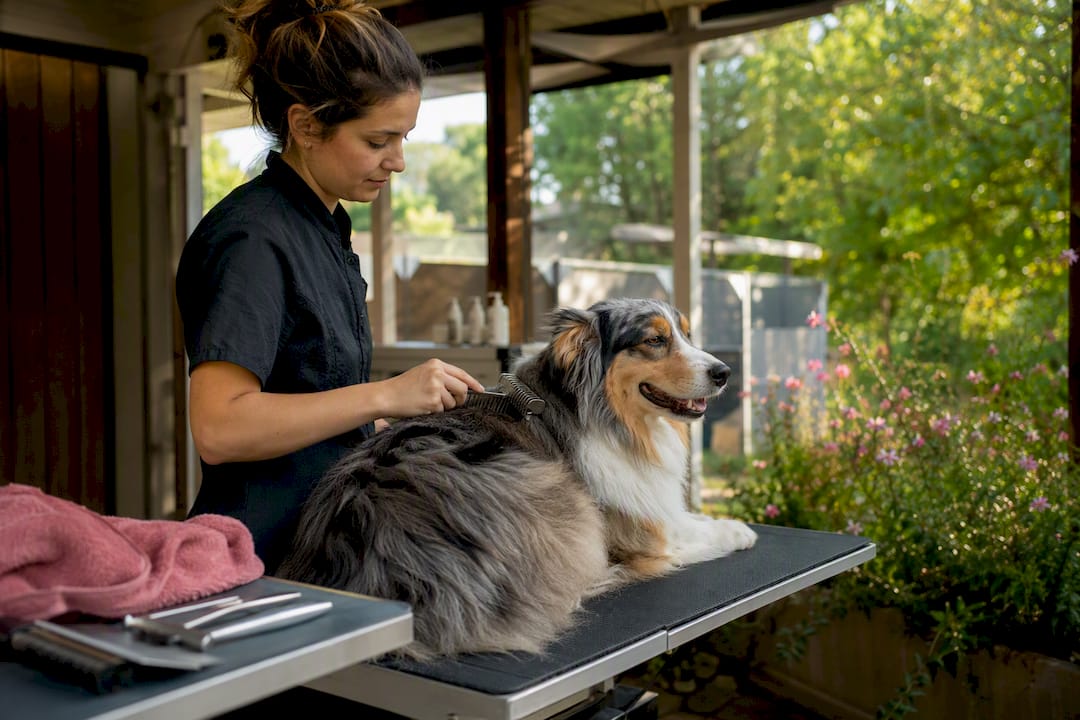

A deshedding treatment for dogs is a multistep grooming service that pulls loose undercoat out at the root using specialized shampoo, high-velocity drying, and raking tools rather than a quick brush. It works best on double-coated breeds like Labradors, Huskies, and German Shepherds during spring and fall coat blows. Most dogs see a real drop in loose fur around the house for a few weeks afterward.
TL;DR:
- Double-coated breeds benefit most from a deshedding treatment during peak coat blow seasons in spring and fall, lasting about four to six weeks.
- The process includes pre-bath raking, specialized deshedding shampoo, high-velocity blowout, and a final brush, which cannot be replicated at home with basic tools.
- It typically takes between 45 minutes to two hours, depending on coat thickness and size, with higher costs for heavily matted or infrequently groomed dogs.
- Shaving a double coat is harmful and can disrupt natural temperature regulation, so professional deshedding is necessary for effective fur removal.
- Owners should schedule treatments every 4 to 8 weeks, especially for heavy shedders, and maintain results with gentle brushing using the correct rake between visits.
Table of Contents
- What Makes a Deshedding Treatment Different From a Regular Bath
- What Happens Step by Step During a Deshed
- Which Dogs Actually Benefit From Deshedding
- When to Book: Seasonal Timing and Frequency
- What We Add That a Bath at Home Cannot
- What to Expect: Results, Time, and Cost
- Risks and Cautions Worth Knowing
- Getting Your Dog Ready for an Appointment
- The Short Version
- A Note From The Pampered Pup
- How The Pampered Pup Handles Deshedding, Done Gently
- Sources
- FAQ
What Makes a Deshedding Treatment Different From a Regular Bath
A standard bath cleans the surface of the coat. A deshedding treatment goes underneath it, targeting the dense undercoat that regular shampoo and a hose simply cannot reach.
The difference comes down to four elements working together:
- Pre-bath raking loosens the undercoat before water ever touches the coat.
- Deshedding shampoo and conditioner are formulated to lift dead hair from the follicle, not just clean the top coat.
- High-velocity blowout forces air through the coat at pressure a household hair dryer cannot match, physically pushing loose fur out.
- A final rake or slicker pass catches whatever the blowout missed.
That high-velocity drying step is what separates a deshed from a bath, and it is also why the service takes longer and costs more than a basic wash.
What Happens Step by Step During a Deshed
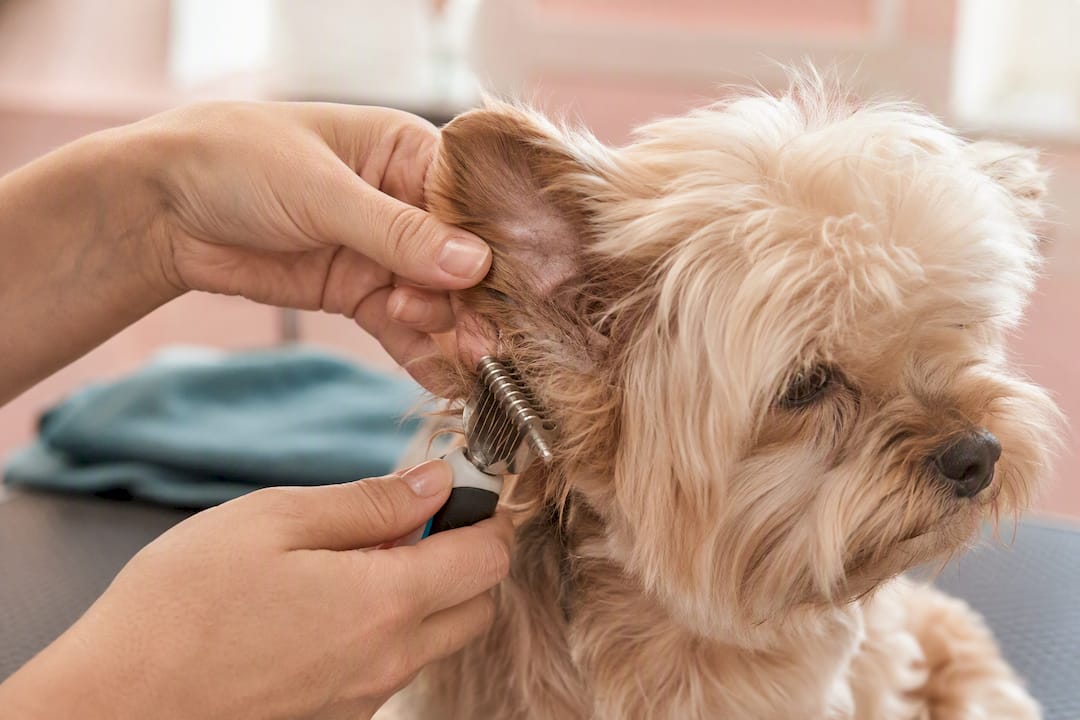
We start every deshedding appointment the same way: a hands-on check for mats, hot spots, or tender areas before a single drop of water touches your dog. Mats get worked out first, gently, because bathing over them only tightens them.
Here is the sequence a well-run deshed follows:
- Pre-bath brush and rake to loosen surface tangles and assess coat density.
- Deshedding shampoo applied and left to sit for a few minutes, giving it time to work into the undercoat.
- Thorough rinse, followed by a conditioning treatment to protect the skin.
- High-velocity blowout, moving in sections from the neck back, which is the step that physically removes the bulk of loose undercoat.
- Final rake or slicker brush finish to smooth the coat and catch remaining loose hair.
A small, single-coated dog might finish in 45 minutes. A large, heavily undercoated breed with a dense coat can take close to two hours, especially if mats need attention first.
Pro Tip: Ask your groomer to check between the ears, behind the elbows, and around the tail base for hidden mats. These spots hide the most tangles and the least airflow.
Which Dogs Actually Benefit From Deshedding
Double-coated dogs have two layers: a soft, insulating undercoat and a coarser topcoat that sheds it seasonally. Single-coated dogs have only one layer and shed far less dramatically.
Dogs that typically benefit most:
- Labrador and Golden Retrievers
- Siberian Huskies and Alaskan Malamutes
- German Shepherds
- Corgis
- Chow Chows and Akitas
Dogs that generally do not need deshedding tools:
- Poodles and Poodle mixes with curly, single-layer coats
- Yorkies, Maltese, and other silky single-coated breeds
- Dogs kept in short clipped cuts year round
Doodles are the trickiest group. Depending on the parentage, some carry enough undercoat to benefit from a gentle deshed, while others have a Poodle-dominant coat that responds better to regular brushing and trims. Puppies and senior dogs can still benefit, but we always adjust pressure and timing for their comfort. Our breed-specific grooming guidance helps us match the right approach to your dog’s actual coat, not just their breed name.
When to Book: Seasonal Timing and Frequency
Coat blows tend to peak in two windows: March through April, and again September through October, when double-coated dogs shed their winter or summer undercoat. Booking just ahead of those windows helps prevent the heavy matting that builds up when loose fur sits trapped against the skin.

Frequency depends on how much your dog sheds; heavy shedders benefit from more frequent treatments during peak season, moderate shedders less so, and light shedders only occasionally.
Along the Gulf Coast, heat and humidity keep coats active nearly year round, so many local dogs shed lightly even in winter rather than fully stopping.
What We Add That a Bath at Home Cannot
A pet-paced approach means we never rush a nervous dog through a high-velocity dryer just to finish on schedule. We watch the dog’s body language and adjust our pace, our tools, and even our voice to match what that individual dog needs that day.
Professional technique matters here. High-velocity dryers move a lot of air fast, and using one safely on a wiggly or anxious dog takes practice most households do not have time to build. We also select shampoo and conditioner based on coat condition, something a generic bottle from a pet store cannot account for.
Between visits, owners can maintain results with a quality undercoat rake used gently, in the direction of hair growth, a few times a week. Using the correct tool design, including a curved edge and skin guard, prevents accidental irritation.
Pro Tip: Brush in short sessions, five to ten minutes at a time, rather than one long wrestling match. Dogs relax into a routine faster than they relax into a marathon.
Every groomer on our team trains through the Pampered Pup Grooming Academy, our in-house apprenticeship program, before working solo on a dog. That training, paired with our cage-free, open-space layout, means your dog is never crated between steps and never rushed.
What to Expect: Results, Time, and Cost
Most owners notice a real reduction in loose fur around the house, often in the 60 to 80 percent range, lasting roughly four to six weeks before the next seasonal push begins.
Session length runs anywhere from 45 minutes for a smaller, lighter-coated dog to nearly two hours for a large dog with a dense double coat. Pricing and time both increase when significant matting has to be removed first, or when a dog’s coat has gone longer than usual between grooms. Size, coat density, and how recently your dog was last deshed all factor into where an individual appointment falls within that range.
Risks and Cautions Worth Knowing
Shaving a double coat is never the answer, no matter how tempting it sounds in July. Shaving can permanently damage guard hairs and disrupt a dog’s natural ability to regulate body temperature, leaving skin more exposed to sun and heat rather than less.
A few things to watch for:
- Senior dogs or dogs with skin conditions should get a vet’s input before a deshed, especially if there is any irritation present.
- Severely matted coats need dematting first, never a rushed blowout over the top.
- Red flags at any groomer: brush burn, excessive clipping to “solve” shedding, or a blowout that seems rushed through in a few minutes.
Getting Your Dog Ready for an Appointment
A little preparation makes the whole visit smoother for your dog and for us.
- Mention any medications, sensitivities, or mobility issues when you book.
- Remove your dog’s collar beforehand if our team requests it for the bathing area.
- Let us know your dog’s temperament, especially around dryers or handling of paws and ears.
- Bring along anything your dog finds comforting, like a favorite towel, if it helps them settle.
At home between visits, a gentle undercoat rake two to three times a week keeps loose hair from building back up, especially heading into a seasonal blow. Our guide on preventing matting between grooms walks through a simple weekly routine that pairs well with professional deshedding.
The Short Version
- A deshedding treatment removes loose undercoat using specialized shampoo, high-velocity drying, and raking, not just a bath.
- Double-coated breeds benefit most, especially before spring and fall coat blows.
- Never shave a double coat, and always check with a vet first for seniors or skin concerns.
- Book a professional deshed every 4 to 8 weeks depending on your dog’s coat, and maintain with gentle brushing at home in between.
— Martha Traweek
A Note From The Pampered Pup
We built our space to be open and cage-free because dogs settle faster when they can see what is happening around them. Gulf Coast humidity keeps coats working overtime most of the year, so we adjust our deshedding approach season to season rather than following a fixed script. If you are unsure whether your dog is a good candidate, ask us. We are always glad to talk it through before you book.
How The Pampered Pup Handles Deshedding, Done Gently
A deshedding treatment done well takes patience, the right tools, and a dog who feels safe enough to hold still for it. That is exactly what our cage-free, pet-paced environment is built for. Your dog moves through each step, pre-bath rake, shampoo, high-velocity dry, and final finish, at a pace that matches their comfort, not a clock.
Every groomer on our team trains through the Pampered Pup Grooming Academy, so the technique behind each deshed is consistent and gentle, even for anxious or senior dogs. If you are new to us, our $19 Pampered Pup Package is a low-pressure way to introduce your dog to our space before committing to a full deshedding service.
Ready to get ahead of the next coat blow? Book an appointment online or call us a at 251-776-2104. We serve families throughout Mobile, Daphne, Spanish Fort, and Fairhope, and we would love to meet your dog.
Sources
- De-Shedding Treatment: Cost, Frequency & Process | GroomBoard
- What is deShedding and why should you do it? | FURminator
- The Complete Guide to Dog Deshedding Treatment | Brooklyn Pet Spa
- Professional De-Shedding Treatments Explained | The Groomer, LLC
FAQ
Is a Deshedding Treatment Good for Dogs?
Yes, for double-coated breeds it is one of the more effective ways to reduce loose fur safely, since it removes trapped undercoat that regular brushing and bathing tend to miss.
How Long Do Deshedding Treatment Results Last?
Most dogs stay noticeably less shed out for about four to six weeks, though heavy seasonal shedders may need a follow-up sooner during peak coat-blow months.
What Do Groomers Do to Deshed a Dog?
Groomers pre-check and dematt the coat, apply a deshedding shampoo with dwell time, rinse and condition, then use a high-velocity dryer followed by a final rake or slicker brush to remove remaining loose hair.
What Tools Do Groomers Use to Deshed a Dog?
Groomers rely on undercoat rakes, deshedding shampoos and conditioners, and high-velocity dryers, since HV drying is what pushes the deepest layer of loose undercoat out of the coat.
Can I Deshed My Dog Myself at Home?
Light maintenance brushing between appointments is fine with the right undercoat rake and gentle technique, but a full deshedding treatment with high-velocity drying is best left to a trained groomer for safety and results.
Recommended
- Bath, Tidy-Up, or Full Groom? How to Know What Your Dog Needs
- 5 Ways to Prevent Dog Matting Between Grooms
- How Often Should You Groom a Doodle?
- How Often Should You Bathe Your Dog? A Mobile Groomer’s Guide
Want a hand with this? We're a cage-free, pet-paced grooming salon on Oak Circle Drive East in Mobile, AL, with early drop-off from 7:30 AM Tuesday through Friday (8:30 AM Saturday). Book online or call 251-776-2104 and we'll build a plan around your dog.