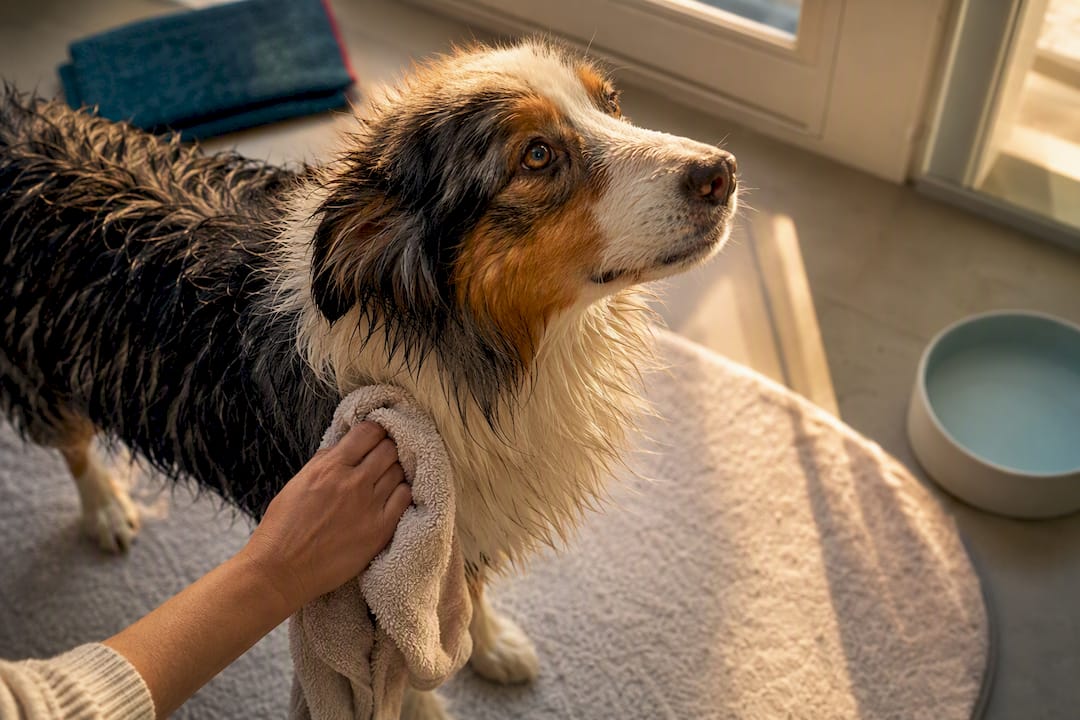

A damp “wet-dog” smell right after a bath is normal and fades as your dog fully dries. But a sour, fishy, or greasy odor that lingers after drying points to something bathing can’t fix: ears, teeth, skin folds, or anal glands. Dry your dog completely, then do a quick nose check at the ears, paws, and rear. If the smell persists or your dog seems uncomfortable, it’s time to call your veterinarian.
TL;DR:
- Lingering odors after a bath often indicate medical issues such as ear, skin, or gland infections rather than grooming mistakes.
- Proper drying is crucial, especially in thick or double coats, to prevent odor caused by trapped moisture and microbial growth.
- Most smells originate from specific areas like ears, paws, or anal glands, so localized checks can identify underlying health problems.
- Bathing technique, including thorough rinsing and staged drying, is more important than the shampoo brand in maintaining a fresh scent.
- Masking odors with fragrance harms skin and masks problems; regular vet check-ups ensure underlying conditions are properly treated.
Table of Contents
- Why Does My Dog Still Smell After a Bath? Quick Causes to Check
- Why Wet-Dog Smell Happens in the First Place
- How to Bathe and Dry Your Dog So the Smell Doesn’t Linger
- When the Smell Is Medical, Not Mechanical
- Keeping Your Dog Smelling Fresh Between Grooms
- What Not to Do When Your Dog Smells Bad After a Bath
- How The Pampered Pup Approaches a Fresh, Lasting Bath
- Why Most Bathing Advice Skips the Real Problem
- Sources
- FAQ
Why Does My Dog Still Smell After a Bath? Quick Causes to Check
Before you reach for another bottle of shampoo, take thirty seconds to find where the smell is actually coming from. The scent itself is often the clue.
- Damp, musty odor: Classic wet-dog smell. Wait for full drying before judging.
- Corn-chip or musty-sweaty smell, especially in paws or skin folds: Often yeast overgrowth.
- Fishy odor: Frequently traced to the anal glands, especially if your dog is scooting or licking that area.
- Foul, sour, or rotten smell on the skin: Can signal a bacterial infection.
- Bad breath alongside body odor: May point to dental disease rather than the coat at all.
Run a hands-on check: sniff the ears first, then the paws, then part the undercoat near the neck and hips, and finally check breath and the base of the tail. Dry your dog fully and recheck. If the odor is localized to one of these spots rather than the whole coat, grooming alone won’t solve it, and a vet visit is the next right step.
Why Wet-Dog Smell Happens in the First Place
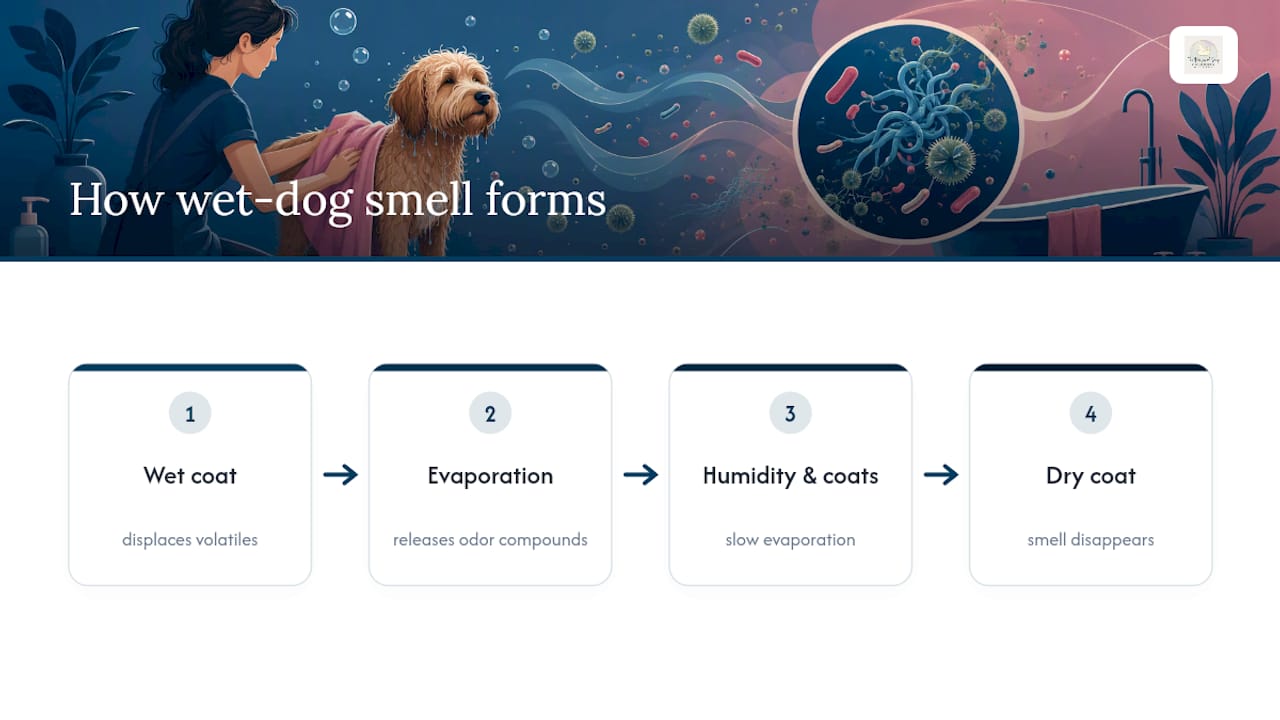
That familiar damp smell isn’t dirt. It’s chemistry. Research from the Monell explanation of wet-dog smell shows that water on your dog’s skin displaces tiny volatile compounds that normally sit undisturbed in the coat. As that water evaporates, those compounds lift into the air, and you smell them.
Humidity slows the whole process down. Along the Gulf Coast, where the air rarely feels dry, a damp coat can hang onto that smell far longer than it would in a drier climate. Thick or double coats trap moisture closest to the skin, which draws the scent out even more.
This is a temporary, mechanical event, not an infection. Once the coat and skin are truly dry, the smell should disappear entirely. If it doesn’t, you’re likely dealing with a microbial or medical cause rather than ordinary evaporation.
How to Bathe and Dry Your Dog So the Smell Doesn’t Linger
Getting a dog to smell fresh after a bath, and stay that way, comes down to technique more than any single product. A rushed bath and a half-dry coat are the two most common reasons owners find themselves asking why their dog still smells like wet dog hours later.
- Brush before you wet the coat. Mats trap water underneath them, which keeps skin damp long after the visible coat feels dry.
- Use a dog-specific, pH-balanced shampoo. Medicated shampoos should only be used when a vet has recommended them for a suspected infection.
- Rinse until the water runs completely clear, then rinse once more. Pay close attention to the undercoat, armpits, and skin folds, where shampoo residue loves to hide.
- Dry in stages: towel blot first, then a microfiber towel, then a low-heat dryer for thick or double coats. According to PetMD’s bathing guidance, trapped moisture near the skin is one of the leading causes of lingering odor and irritation.
- Finish with a full check. Dry ears with a cotton ball or vet-approved drying solution, dry between the paw pads, and give the coat a final brush.
Pro Tip: Skip the perfume spray. Fragrance products can mask a smell that’s actually getting worse underneath, and they may irritate skin that’s already sensitive.
When the Smell Is Medical, Not Mechanical
Some odors have nothing to do with how your dog was bathed. If the smell survives a thorough drying and a careful rinse, one of these four sources is usually the reason.
- Ear infections: A yeasty or foul odor from the ears, paired with head shaking or dark discharge, calls for a vet exam and prescribed ear medication.
- Yeast or bacterial skin infections: A greasy, corn-chip smell often responds to medicated shampoos containing chlorhexidine or miconazole, though the AKC notes that treatment aims to restore balance in the skin’s natural yeast population rather than eliminate it completely. Regimens often mean repeated medicated baths over several weeks.
- Dental disease: Persistent bad breath, red gums, or gum recession point to a mouth problem, not a coat problem, and may require a professional cleaning.
- Anal sac disease: A sharp, fishy smell combined with scooting or excessive licking usually means the glands need to be expressed or examined by a vet.
A dog that still smells noticeably off immediately after a quality bath is often signaling one of these medical issues rather than a grooming shortfall. Worsening odor paired with any of these signs is your cue to book a vet visit rather than schedule another bath.
Keeping Your Dog Smelling Fresh Between Grooms
The goal isn’t more baths. It’s the right care between them. Over-bathing strips the protective oils in your dog’s skin and can make odor problems worse, not better.
- Match bath frequency to coat and lifestyle. A monthly bath is a reasonable baseline for most dogs; increase it for dogs that swim in the bay or roll in Gulf Coast sand.
- Brush regularly. Daily or weekly brushing removes loose hair before it traps moisture and dander against the skin.
- Use waterless wipes for spot cleaning between full baths, especially on paws after a beach walk.
- Check ears and gums weekly as part of a normal petting session, so you catch changes early.
- Ask a groomer to check anal glands at each visit rather than waiting for a problem to announce itself.
Pro Tip: A de-shedding treatment during Gulf Coast shedding season removes far more loose undercoat than a bath alone, which means less trapped moisture and less odor between grooms.
Our guide on how often to bathe your dog breaks this down further by coat type.
What Not to Do When Your Dog Smells Bad After a Bath
A few common home fixes cause more harm than the smell they’re meant to solve.
- Never use bleach, borax, hydrogen peroxide, or undiluted vinegar on skin or in ears.
- Skip human shampoo. Its pH doesn’t match a dog’s skin and can worsen irritation.
- Don’t treat over-bathing as a fix for odor; it often makes things worse.
- Avoid masking the smell with perfume sprays, which can irritate skin and hide a worsening infection.
When in doubt, stop bathing and call your vet rather than trying another home remedy. Our post on why dogs get itchy after grooming covers more on how the wrong products affect skin health.
How The Pampered Pup Approaches a Fresh, Lasting Bath
At The Pampered Pup, every bath happens at your dog’s own pace, in an open, cage-free space rather than a kennel. There’s no rushing the drying process, because rushing is exactly what leaves moisture trapped near the skin.
Our groomers dry thoroughly by coat type, paying close attention to ear canals, paw pads, and skin folds where dampness likes to hide. For double-coated and dense-coated breeds, that means extra time and the right drying approach for that coat, something we cover in our breed-specific grooming guide.
If we notice signs that suggest an ear, skin, or gland issue rather than a grooming issue, we’ll gently let you know it’s worth a vet visit. Ready for a soothing, thorough bath done right? Book online or call 251-776-2104.
Why Most Bathing Advice Skips the Real Problem
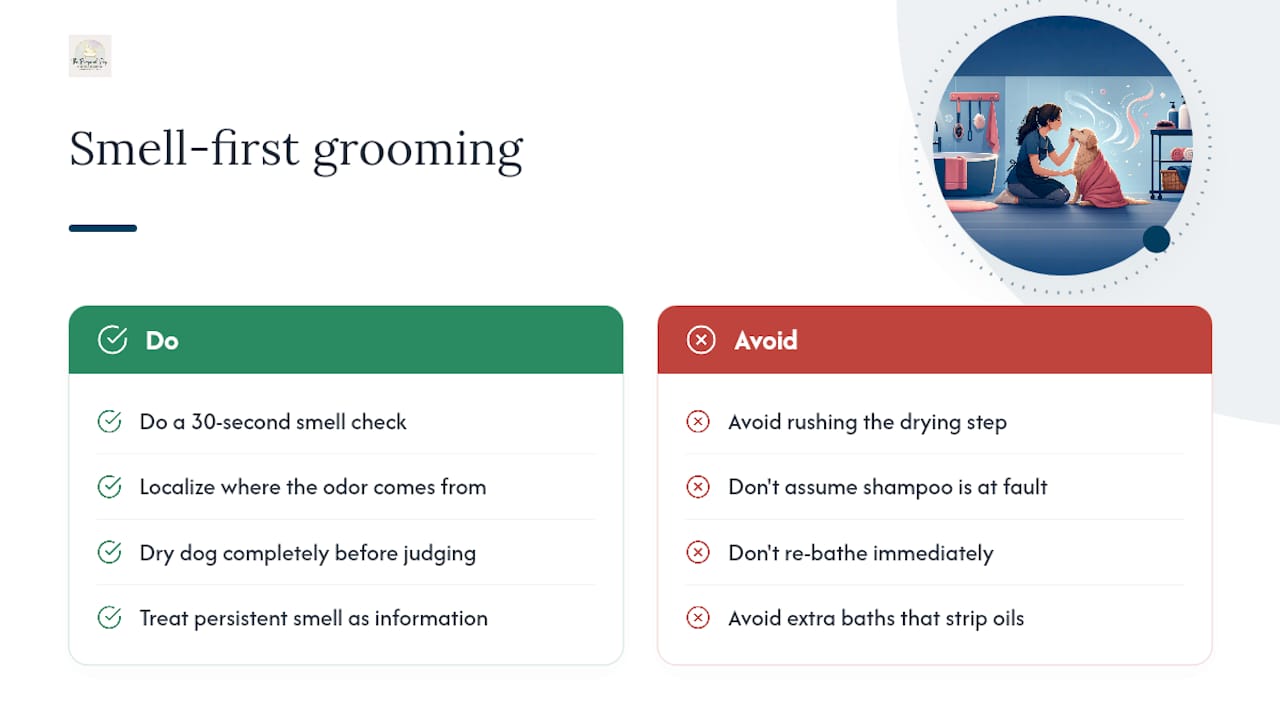
Most advice about post-bath odor stops at shampoo brands, and that’s the wrong place to focus. Drying technique matters more than any product on the shelf, and it’s the step almost everyone rushes.
The conventional wisdom treats every lingering smell as a grooming failure, which sends owners into a cycle of extra baths that strip natural oils and make things worse. The evidence points the other way. A dog that still smells bad after a genuinely good bath is usually telling you something about ears, teeth, glands, or skin, not about the shampoo you used.
If I could get owners to prioritize one thing, it’s the thirty-second smell check before reaching for the bottle again. Localize the odor first. Dry completely before judging anything. And treat a smell that survives full drying as information, not a grooming problem to out-bathe.
— Martha Traweek
Sources
- Monell explanation of wet-dog smell (summarized on VIN)
- Why does my dog smell? — Urban Animal Veterinary event summary
- Yeast dermatitis in dogs — AKC expert advice
- How to bathe a dog — PetMD
FAQ
How do I get my dog to stop smelling after a bath?
Dry your dog completely, including the undercoat, ears, and paw folds, since trapped moisture is a leading cause of lingering odor. If the smell remains after full drying, check ears, teeth, and the anal gland area for a medical cause.
Why does my dog smell bad even right after a bath?
An odor that survives a thorough bath and rinse is usually medical, not a hygiene issue, often tracing back to ear infections, dental disease, or impacted anal glands. A quality bath removes surface dirt but can’t resolve an underlying infection.
How do I get rid of my dog’s stinky wet-dog smell?
True wet-dog smell comes from volatile compounds releasing as water evaporates off the skin, and it resolves once your dog is fully dry. Speeding up drying with a towel blot followed by a low-heat dryer shortens how long that smell lingers.
What can I put on my dog after a bath to smell good?
Skip fragrance sprays, since they can irritate skin and mask a worsening problem rather than solve it. A thorough brush-out after drying and a dog-safe, pH-balanced shampoo during the next bath are safer ways to keep your dog smelling fresh.
Recommended
- How Often Should You Bathe Your Dog? A Groomer’s Guide
- Bath, Tidy-Up, or Full Groom? What Your Dog Needs
- Why Your Dog Is Itchy After Grooming: Relief and Prevention
Want a hand with this? We're a cage-free, pet-paced grooming salon on Oak Circle Drive East in Mobile, AL, with early drop-off from 7:30 AM Tuesday through Friday (8:30 AM Saturday). Book online or call 251-776-2104 and we'll build a plan around your dog.