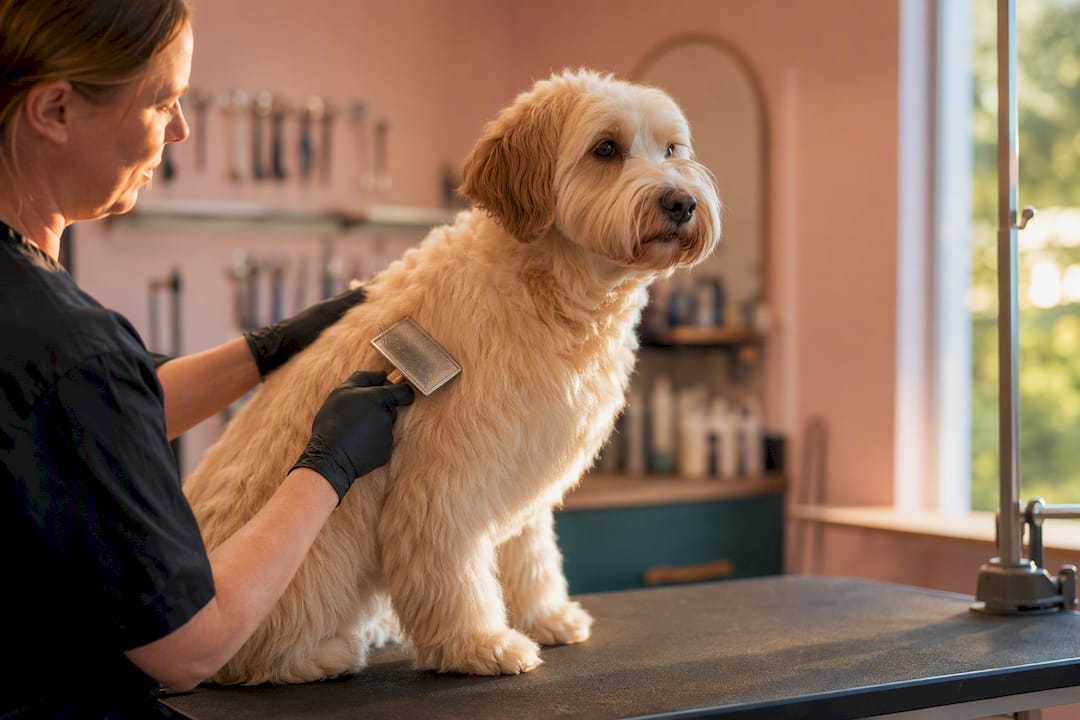

This glossary translates the words groomers use so you can book the right service and avoid pickup surprises. Understanding dog grooming terms turns a rushed drop-off into a calm, informed conversation with your groomer.
Three things help every time: bring a photo of the look you want, ask for the length in inches or a blade or guard number, and mention your dog’s coat type. At The Pampered Pup, our cage-free consultations often include a quick chat about hand-stripping, de-shedding, or whichever technique suits your dog’s coat, so you always know what’s happening before the first clip.
- Bring a reference photo, not just a breed name.
- Ask for length in inches or blade/guard numbers.
- Mention coat type, sensitivities, and any recent skin or ear issues.
Key Takeaways
Clear communication about coat type, service package, and exact length prevents nearly every grooming misunderstanding pet parents run into.
| Point | Details |
|---|---|
| Specify length precisely | Use inches or a blade/guard number instead of just a style name like “puppy cut.” |
| Know your coat type | Double coats should never be shaved; ask about de-shedding instead. |
| Match the service to the need | Bath & brush covers washing only; full groom adds a haircut, nails, and ears. |
| Plan appointment timing | Bath-only visits book faster; haircuts may need four to six weeks lead time in busy seasons. |
| Choose pet-paced care | The Pampered Pup’s cage-free, consultation-first approach in Mobile keeps grooming calm and clear from drop-off to pickup. |
Table of Contents
- Understanding Dog Grooming Terms for Services and Appointments
- What Popular Dog Haircut Names Actually Mean
- Coat Types and Anatomy Terms Groomers Use
- Grooming Tools and Techniques Explained
- Getting Your Dog Ready for a Groom and Caring for the Coat After
- Inside a Pampered Pup Grooming Consultation
- Why Shared Vocabulary Between Owners and Groomers Matters
- Book a Cage-Free Grooming Experience in Mobile
- Sources
- FAQ
Understanding Dog Grooming Terms for Services and Appointments
Every grooming menu uses a handful of core terms, and knowing them saves you from booking the wrong appointment.
- Bath & Brush. This covers washing, drying, and brushing only. No scissors touch your dog’s coat. A full groom, by contrast, adds a haircut, nail trim, ear cleaning, and a sanitary trim on top of the bath and blow-dry.
- Full Groom. The complete package. Expect a bath, blow-dry, haircut tailored to your dog’s coat and your preferences, nail trim, ear cleaning, and sanitary trim.
- Tidy-Up or Trim. A lighter service, usually focused on the face, feet, and sanitary area without reshaping the whole coat. Great for dogs between full grooms.
- Sanitary Trim. Short clipping around the hindquarters and belly to keep your dog clean and comfortable, especially useful for longer coats.
- De-Shedding Treatment. A specialized bath and blow-out combination that pulls loose undercoat before it lands on your furniture. Done correctly, de-shedding treatments can meaningfully reduce loose undercoat, which matters a great deal along the Gulf Coast, where shedding rarely takes a season off.
- Nail Grind. A rotary tool smooths nail edges after trimming, an add-on many owners request for dogs who dislike traditional clippers.
Appointment length depends on coat and condition. A bath and blow-dry for a medium, short-haired dog typically runs one to two hours, while a full haircut adds time, often bringing the total to somewhere between ninety minutes and four hours depending on size, coat density, and matting. Bath-only appointments tend to book faster than haircuts, so if your calendar is tight, that is often the quicker path to a fresh, refreshed pup.
Before you arrive, groomers typically ask for current vaccination records and a few minutes to let your dog settle in. A short, calm arrival helps set the tone for the whole visit. If you are still deciding which package fits your dog, our guide to choosing between a bath, tidy-up, or full groom walks through the decision in plain language.
What Popular Dog Haircut Names Actually Mean
Haircut names sound specific, but they vary from groomer to groomer more than most owners expect. Treat every name below as a starting point for conversation, not a guaranteed outcome.
- Puppy Cut. An all-over trim, generally left at a soft, even length. Terms vary, but a puppy cut usually leaves at least half an inch of coat, giving a fluffy, youthful look regardless of your dog’s age.
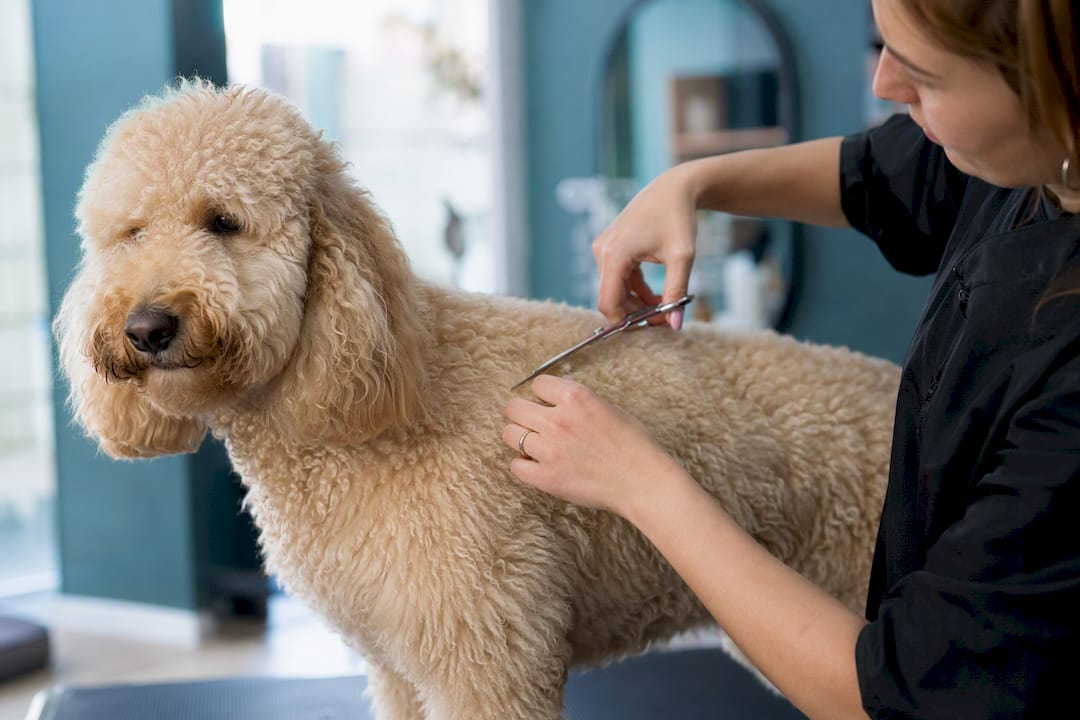
- Teddy Bear Cut. A rounded face and even body length designed to mimic a stuffed animal’s soft silhouette. Popular on doodles and poodle mixes with curly or wavy coats.
- Kennel Cut (Summer Cut). Much shorter than a puppy cut, typically under half an inch, and chosen by owners who want low maintenance through hot, humid months.
- Lamb Cut. Longer coat on the legs and head with a shorter body, named for its resemblance to a lamb’s silhouette. Common on poodles.
- Lion Cut. A short body with a fuller mane around the head and neck, plus tufts at the tail. Striking, but it needs a groomer experienced with poodle-type coats to execute cleanly.
- Poodle Clip. An umbrella term covering several traditional poodle styles, from the continental clip to simpler pet trims. Ask your groomer which variation they mean.
- Top Knot. A gathered tuft of hair on top of the head, often finished with a small bow or band. A finishing touch rather than a full style.
Length is the detail that prevents disappointment. Puppy cuts commonly leave at least 0.5 inches of coat, while kennel cuts fall shorter than that mark, so half an inch is a meaningful dividing line between two very different looks. Guard combs and blade numbers give groomers a precise way to hit a target length, and a photo removes almost all remaining ambiguity.
One warning matters more than any style name: double-coated breeds should never be shaved down to the skin, since shaving can disrupt the coat’s natural insulation and sun protection, sometimes leading to patchy, uneven regrowth. If your dog has a double coat, ask about de-shedding or a longer trim instead of a close shave, even in July heat.
Coat Types and Anatomy Terms Groomers Use
Your dog’s coat type shapes every styling decision, so it helps to know the basic families.
- Double Coat. A soft undercoat beneath a coarser outer layer, common in Labs, huskies, and many mixed breeds. Sheds heavily and should not be shaved.
- Single Coat. One layer of hair, often silkier and lower shedding, seen in breeds like Yorkies and Maltese.
- Curly or Continuous-Growing Coat. Hair that grows continuously rather than shedding in cycles, typical of poodles and many doodles. Requires regular haircuts rather than seasonal blow-outs.
- Wire Coat. A harsh, textured coat found on terriers, often maintained through hand-stripping rather than clipping to preserve its texture.
Groomers also use a handful of anatomy words worth knowing: the “skirt” refers to longer hair along the belly and sides, “feathers” describe fringe on the legs, ears, or tail, and “pom poms” are the rounded tufts left on the legs or tail tip in certain poodle-style clips.
Matting deserves its own mention. Mats form when loose undercoat tangles into tight knots, usually near the ears, armpits, and behind the legs. Humane dematting takes patience and the right tools, but severe matting sometimes leaves a short, humane reset as the only safe option.
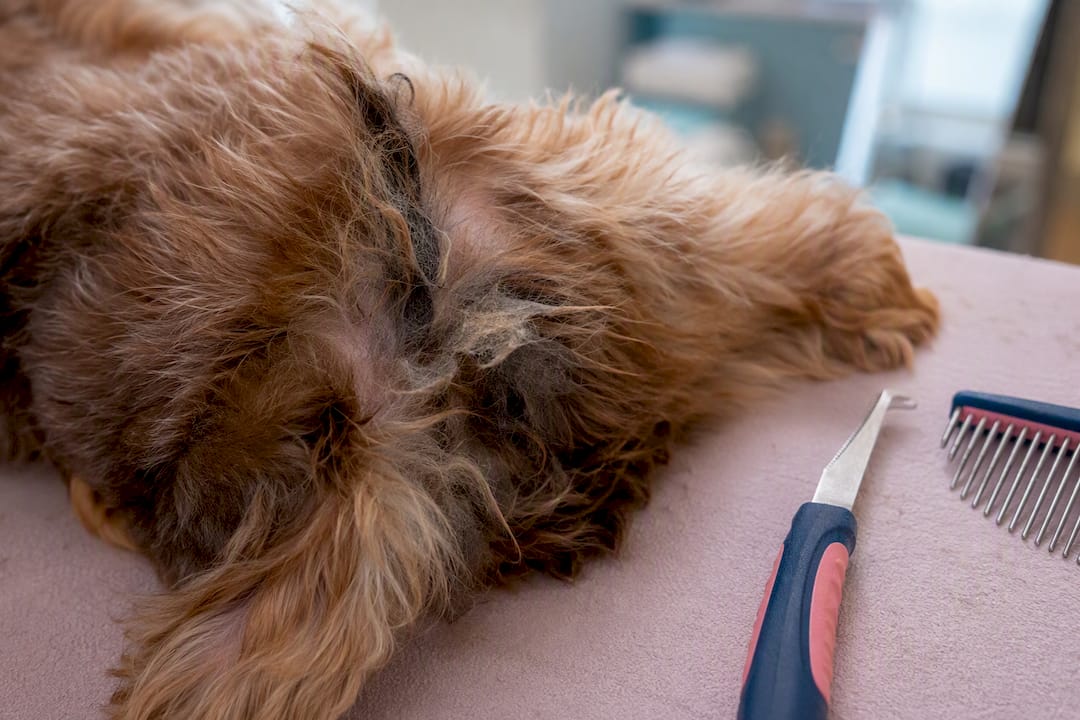
Pro Tip: Snap a quick photo of any matted areas before your appointment. It gives you and your groomer a shared reference point if a shorter cut becomes necessary for your dog’s comfort.
Grooming Tools and Techniques Explained
Blade and guard numbers are the real language of length. Here’s a practical map:
- Blade #10. Very short, close to the skin. Used mainly for sanitary trims and paw pads, not full-body cuts.
- Blade #7 or #5. Short, kennel-cut lengths, roughly one-eighth to one-quarter inch.
- Blade #4 or #3. Longer pet lengths, closer to three-eighths to half an inch, often the starting point for a puppy cut.
- Guard Combs. Attachments that snap onto a blade to extend the cutting length further, useful for owners who want more coat left on.
- Hand-Stripping. A technique used mostly on wire-coated terriers, where dead hair is pulled by hand or with a stripping tool to preserve texture and color.
- Thinning Shears. Scissors with notched teeth that blend and soften a cut without shortening it dramatically.
- Blow-Out. High-velocity drying that forces loose undercoat out of the coat, a key step in effective de-shedding.
A few flags are worth asking about at pickup: mild redness in skin folds, any sensitivity around the ears, or unusually severe matting that required a shorter cut than planned. A good groomer will mention these proactively, but it never hurts to ask.
Getting Your Dog Ready for a Groom and Caring for the Coat After
A little preparation makes every appointment smoother.
- Let your dog relieve themselves shortly before drop-off.
- Bring a reference photo and current vaccination proof.
- Mention any known sensitivities, recent scratching, or behavior changes.
- Note your dog’s usual brushing routine at home, if any.
Between visits, brushing two to three times a week keeps most coats mat-free, and daily brushing helps heavily shedding double coats during Gulf Coast summers. If mats do form, gently work them apart with a slicker brush before they tighten, and our tips on preventing matting between grooms cover simple home techniques.
How often you groom depends heavily on coat type: continuous growers typically need a haircut every four to six weeks, while double-coated breeds often do well with seasonal de-shedding and brushing in between.
Pro Tip: If your dog has been swimming in the Gulf, rinse their coat with fresh water the same day. Salt and sand left in the coat can tangle into mats faster than you’d expect.
Inside a Pampered Pup Grooming Consultation
Every visit starts with a short consultation, where we confirm the look you want, ask about home brushing habits, and note any sensitivities before a single clipper turns on.
For a doodle or poodle owner asking for a “puppy cut,” that conversation usually lands on a specific blade or guard length, not just a phrase, so there’s no guessing involved.
We groom at each dog’s own pace in an open, cage-free space, watching coat, skin, and comfort the whole time rather than working against a clock.
At pickup, we’re happy to walk you through what we noticed, whether that’s a bit of matting behind the ears or simply how relaxed your dog seemed throughout the visit.
- Pre-groom consultation on desired style and sensitivities
- Coat and skin check before any clipper touches the coat
- Pet-paced timing with breaks as needed
Our groomers train through the Pampered Pup Grooming Academy, an apprenticeship program built around exactly this kind of careful, breed-aware approach.
Why Shared Vocabulary Between Owners and Groomers Matters
I’ve come to believe most grooming disappointments trace back to a single missing detail: a length, not a personality mismatch or a rushed groomer.
A shared vocabulary, a blade number instead of a vague style name, closes that gap before it opens. Gulf Coast humidity and sand only raise the stakes, since the wrong length can mean matting again within days. Bring your photos, bring your notes, and the rest of the appointment tends to take care of itself.
— Martha Traweek
Book a Cage-Free Grooming Experience in Mobile
Now that you know the vocabulary, booking the right service is simple. The Pampered Pup offers full grooms, tidy-up trims, bath and brush services, de-shedding treatments, and gentle care designed around puppies, seniors, and sensitive dogs, all in a cage-free space where your dog moves at their own pace instead of being rushed through a schedule.
New clients can start with our $19 Pampered Pup Package, a gentle way to introduce your dog to our space before a full groom. We serve families throughout Mobile, Daphne, Spanish Fort, and Fairhope, and our breed-specific grooming guidance helps match doodles, poodles, and every coat type to the right service.
Book online or call 251-776-2104 to reserve a spot for your dog.
Sources
- Professional Dog Grooming Terms Explained: How to Ask for What You Want at the Groomer’s - Your Dog Advisor
- Dog Grooming Terms Explained: A Plain-English Glossary for Pet Owners | Pawsh
- Dog Grooming Styles & Haircuts: The Complete Guide (2026) | GroomBoard
- Grooming Appointments Made Easy: What to Expect from Start to Finish | Zoetis Petcare
FAQ
What Are Some Common Words Used in Dog Grooming?
Common terms include bath & brush, full groom, sanitary trim, de-shedding, blade number, guard comb, and hand-stripping, each describing a specific service or tool.
What Are the 7 Steps of Grooming a Dog?
A typical full groom follows brushing out the coat, a bath, blow-drying, a haircut, nail trimming, ear cleaning, and a final sanitary trim.
How Do I Ask for a Specific Length at the Groomer?
Give your groomer an exact measurement in inches or a blade/guard number rather than just a style name, since terms like “puppy cut” vary between groomers.
Should My Double-Coated Dog Be Shaved in Summer?
No. Shaving a double coat can damage its natural insulation and sun protection; de-shedding treatments manage summer shedding more safely.
How Far Ahead Should I Book a Grooming Appointment?
Bath-only appointments usually book quickly, while full haircuts may require four to six weeks of lead time during busy seasons.
Recommended
- Beyond the Brush: Why Grooming Is Essential for Your Pet’s Well-Being | Mobile, AL
- Dog Grooming Tips & Advice | The Pampered Pup Blog | Mobile, AL
- Bath, Tidy-Up, or Full Groom? How to Know What Your Dog Needs | Mobile, AL
- Breed-Specific Dog Grooming in Mobile, AL | Doodles, Poodles & More | The Pampered Pup
Want a hand with this? We're a cage-free, pet-paced grooming salon on Oak Circle Drive East in Mobile, AL, with early drop-off from 7:30 AM Tuesday through Friday (8:30 AM Saturday). Book online or call 251-776-2104 and we'll build a plan around your dog.