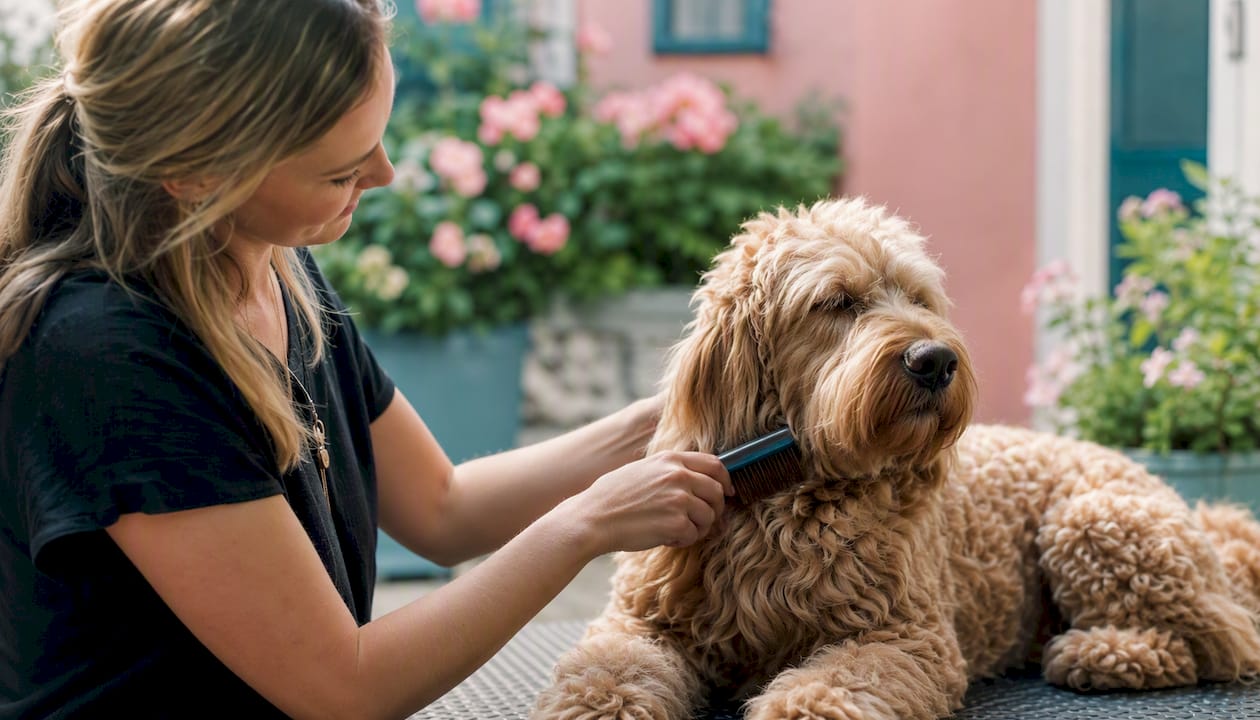

Dog grooming time typically runs anywhere from 30 minutes to 4+ hours, depending on your dog’s size, coat type, and the services requested. A simple bath and brush for a small dog might wrap up in under an hour, while a full groom on a large, curly-coated dog can take the better part of an afternoon. Hands-on grooming usually takes about an hour to an hour and a half, but total elapsed time at a traditional salon commonly stretches to 3–4 hours once you factor in queueing and cage drying.
Here are practical planning windows by appointment type:
- Bath and brush only: 30–60 minutes (small dog) to 1–1.5 hours (large dog)
- Tidy-up trim: 45–75 minutes depending on size and coat condition
- Full groom (bath, dry, cut, nails, ears): 1.5–3 hours for most dogs; up to 4+ hours for large or curly coats
- De-shedding treatment: Add 30–60 minutes to a standard bath appointment
- First-time visit or severely matted coat: Plan for the upper end of any range, sometimes longer
One local note worth knowing: here on the Gulf Coast, high humidity and the salt and sand that cling to your dog after a beach day genuinely extend drying time compared with drier climates. We factor that into every appointment at The Pampered Pup.
Key Takeaways
Dog grooming time ranges from 30 minutes to 4+ hours, with coat type, dog size, and salon workflow being the three factors that most reliably determine where your appointment lands in that range.
| Point | Details |
|---|---|
| Plan by size and coat | Small smooth-coated dogs: 30–75 min; large curly or double coats: up to 4+ hours for a full groom. |
| Active time vs. elapsed time | Hands-on grooming is often 60–95 minutes; total salon time runs 3–4 hours with cage drying added. |
| Matting adds the most time | Severely matted coats can double appointment length or require a shave-down instead of a styled cut. |
| Gulf Coast conditions matter | Humidity, salt, and sand extend drying time; rinse your dog the night before a beach-day appointment. |
| The Pampered Pup | Cage-free, pet-paced grooming in Mobile, AL with no kenneling between stages and early drop-off available. |
Table of Contents
- What a full-service grooming session actually includes
- Key factors that affect how long grooming takes
- Typical grooming timeframes by size and coat type
- Step-by-step breakdown of a typical grooming appointment
- When grooming often takes longer than expected
- How to prepare your dog and shorten the appointment
- Booking and scheduling: how far ahead to plan
- What veterinary and breed authorities say about grooming and health
- A groomer’s perspective on timing and comfort
- Calm, cage-free grooming in Mobile, AL at The Pampered Pup
- Sources
- FAQ
What a full-service grooming session actually includes
Understanding what goes into a full groom helps you see exactly where the time goes. A complete grooming appointment typically covers:
- Check-in and coat assessment — reviewing coat condition, skin, and any special handling notes
- Pre-bath brushing and dematting — loosening tangles before water sets them tighter
- Bath and shampoo — often with a conditioning treatment for coat health
- Towel dry and forced-air drying — the single biggest time variable in most appointments
- Brushing and finishing the coat — post-dry brush-out before any cutting begins
- Haircut or clipping — breed-standard or owner-requested style
- Sanitary trims — paw pads, belly, and hygiene areas
- Nail trim or grind
- Ear cleaning
- Finishing touches — bandana, bow, or spritz
Add-ons that extend appointment time include teeth brushing, specialty spa upgrades, and creative styling. A bath and brush skips the haircut and sanitary trims, making it noticeably shorter. A tidy-up trim falls in between, touching up the face, feet, and tail without a full restyle.
At The Pampered Pup, our cage-free grooming services are paced to each dog’s comfort. We never rush a nervous dog through drying or clip a coat before it is truly ready. That approach keeps stress low and coats looking their best.
Key factors that affect how long grooming takes
Several variables shape the clock, and knowing them helps you set realistic expectations before drop-off.
Dog size and surface area are the most straightforward drivers. More body means more coat to wet, shampoo, rinse, dry, and brush. A Chihuahua and a Saint Bernard are simply different projects.
Coat type matters just as much as size:
- Single, short coats (Beagles, Boxers) dry quickly and need minimal brushing
- Long, silky coats (Yorkies, Maltese) tangle easily and require careful detangling
- Dense double coats (Golden Retrievers, Huskies) hold water and take significantly longer to dry
- Curly and woolly coats (Poodles, doodle mixes) need the most drying and brushing time of any coat type
- Wiry coats (Schnauzers, terriers) often require hand-stripping or specific clipping techniques
Coat condition is where the biggest surprises happen. A well-maintained coat moves through each step smoothly. A matted coat can double grooming time or require a shave-down rather than a styled cut.
Temperament and handling needs also shape the timeline. An anxious dog needs gentle reassurance between steps. Senior dogs may need extra breaks. A dog with a skin condition or mobility issue requires slower, more careful handling throughout.
Service complexity adds predictable time. Hand-scissoring a Poodle takes longer than a simple clipper pass. A de-shedding treatment adds a separate blow-out stage. Creative styling adds finishing time.
Salon workflow is something many owners overlook. In a traditional multi-dog salon, cage drying between stages can add 45–90 minutes of wait time even when the groomer’s active hands-on minutes are similar to a one-on-one setting.
Pro Tip: Brushing your dog for five minutes three times a week at home is one of the most effective ways to shorten salon time. It keeps mats from forming and reduces the pre-bath brushing stage considerably.
Typical grooming timeframes by size and coat type
The ranges below reflect size-based baseline times with coat-type modifiers applied. Use them as planning windows, not guarantees.
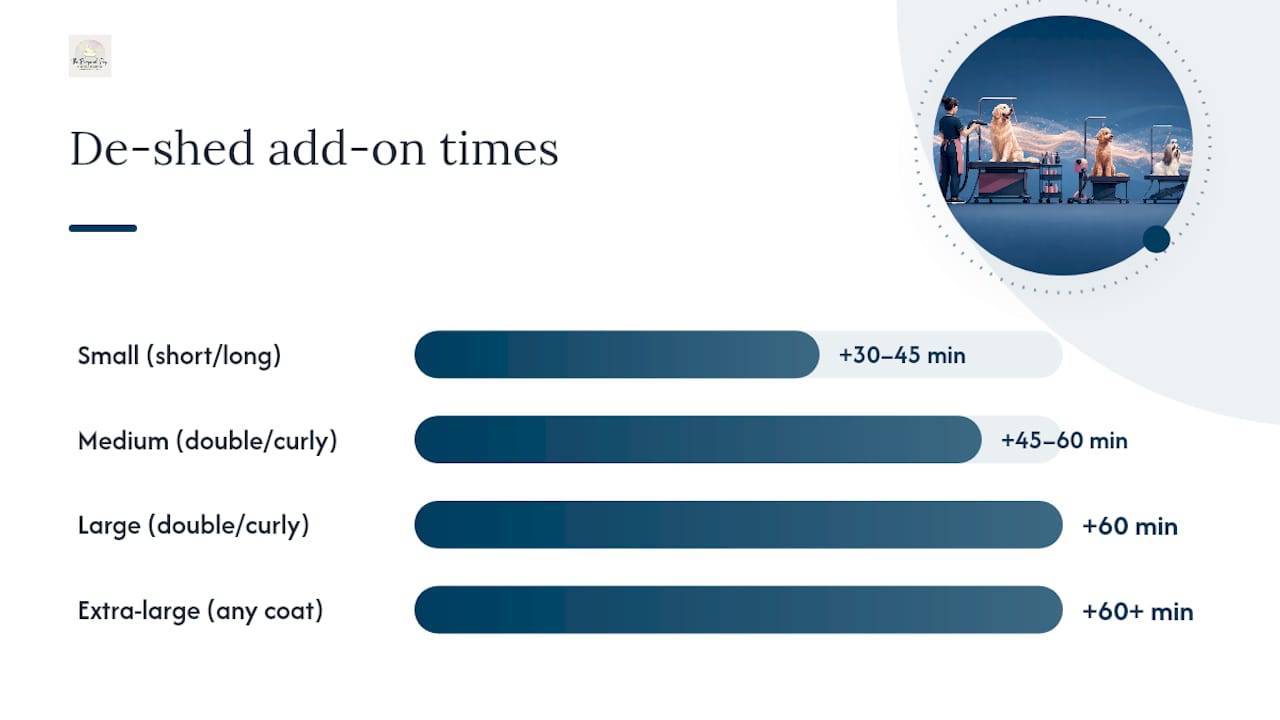
| Size | Coat Type | Bath & Brush | Full Groom | De-Shed Add-On |
|---|---|---|---|---|
| Small | Short/smooth | 30–45 min | 45–75 min | +30–45 min |
| Small | Long/silky or curly | 45–60 min | 75–120+ min | +30–45 min |
| Medium | Short/smooth | 45–60 min | 60–90 min | +30–45 min |
| Medium | Double coat or curly | 60–90 min | 90–150+ min | +45–60 min |
| Large | Short/smooth | 60–75 min | 90–120+ min | +45–60 min |
| Large | Double coat or curly | 75–120+ min | 120–180+ min | +60 min |
| Extra-large | Any coat | 90–120+ min | 150–240+ min | +60+ min |
Breed examples to help you map your dog:
- Short/smooth: Dachshund, French Bulldog, Labrador Retriever, Great Dane
- Long/silky: Maltese, Shih Tzu, Yorkshire Terrier, Cavalier King Charles Spaniel
- Double coat: Golden Retriever, Husky, Corgi, Bernese Mountain Dog
- Curly/doodle: Poodle, Goldendoodle, Labradoodle, Cockapoo
- Wiry: Miniature Schnauzer, West Highland White Terrier, Brussels Griffon
Poodle mixes and dense doodle coats often require precision scissoring and more hand time. A small Cockapoo can take as long as a medium smooth-coated dog simply because of coat density. For breed-specific time estimates, our breed grooming guide breaks down expectations by coat and style.
First visits, severe matting, elderly dogs, and dogs with medical considerations all sit above these ranges. Plan generously for any of those situations.
Step-by-step breakdown of a typical grooming appointment
Each stage of a grooming appointment carries its own time cost. Here is how a typical session unfolds, with approximate durations by dog size.
Drying is consistently the longest single stage for medium and large dogs, and it is where salon workflow makes the biggest difference. In a cage-drying setup, a dog may sit in a warm kennel for 45–90 minutes between the towel dry and the styling stage. That waiting time is included in the 3–4 hour total elapsed time many owners experience at traditional salons, even though the groomer’s active hands-on time is much shorter.
At The Pampered Pup, our cage-free approach means your dog is never left alone in a kennel between stages. We use supervised forced-air drying in an open space, which keeps the process moving and keeps your dog calm.
When grooming often takes longer than expected
Even with the best planning, some appointments run long. These are the situations we see most often.
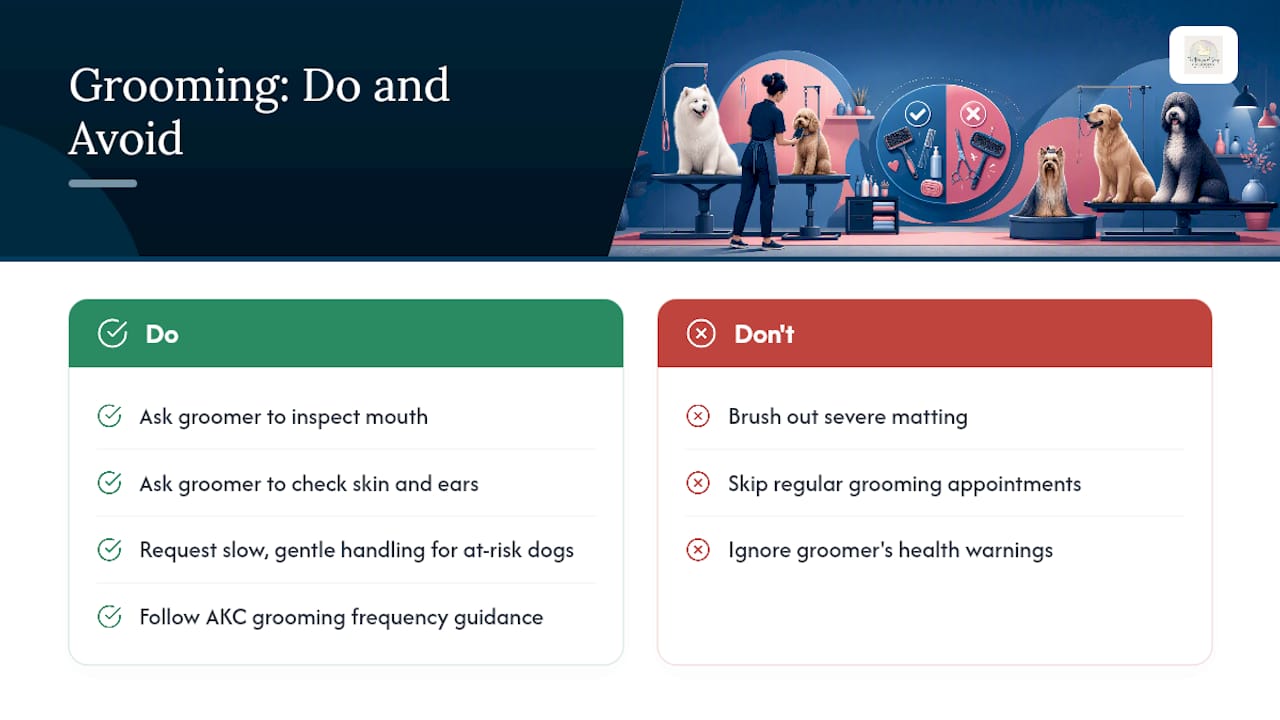
- Severe matting. A coat matted close to the skin cannot always be brushed out safely. Dematting takes significant time and can be uncomfortable for your dog. In serious cases, a humane shave-down is the kinder choice, and that conversation adds time to the appointment before any grooming begins.
- Heavy shedding seasons. Double-coated breeds blow their coats in spring and fall, and the Gulf Coast’s year-round warmth means shedding cycles can be less predictable here. A dog arriving mid-shed needs extra blow-out time and thorough brushing before styling can start.
- Salt and sand from beach days. Gulf Coast dogs who love the water often arrive with salt and fine sand worked deep into their coats. That residue resists rinsing and extends both the bath and drying stages. A quick rinse at home the night before a grooming appointment makes a real difference.
- Behavioral needs. A dog who is anxious, reactive, or simply unaccustomed to handling needs gentle, patient management throughout. We never rush a dog who needs a moment to settle. Safety and comfort come first, and that sometimes means the clock runs a little longer.
- Senior and special-needs dogs. Older dogs may have joint discomfort, reduced stamina, or skin sensitivities that require extra care. Research supports the practice of slowing down, allowing breaks, and modifying handling for dogs with health considerations.
- Health discoveries during intake. Occasionally a groomer notices something during the assessment — a skin irritation, ear odor, or dental concern — that warrants a conversation with you before proceeding. Those moments are worth the pause, and they are one of the genuine benefits of attentive, hands-on grooming.
How to prepare your dog and shorten the appointment
A little preparation at home pays off in a calmer, faster grooming session for your dog.
Brushing regularly is the single most effective habit. For most coats, three to four sessions per week prevents the mat formation that adds the most time to any appointment. Even five minutes of gentle brushing keeps the coat manageable between visits.
Pre-appointment steps that help:
- Brush thoroughly the day before, not the morning of, so your dog arrives relaxed rather than freshly fussed over
- Rinse off salt and sand the evening before if your dog has been to the beach
- Avoid feeding a large meal right before drop-off
- Bring any notes about sensitive spots, skin conditions, or behavioral triggers
For puppies, short handling sessions at home build the trust that makes a first groom go smoothly. Practice touching paws, ears, and the muzzle gently, and reward calmly with praise. That foundation supports a lifetime of low-stress appointments. Our puppy and senior grooming page has more guidance on preparing young dogs for their first visit.
For doodle and curly coats, consistent at-home brushing is non-negotiable. These coats mat faster than almost any other type, especially in Gulf Coast humidity. Our doodle grooming guide covers the brushing tools and frequency that work best in this climate.
Pro Tip: The night before a grooming appointment, check your dog’s paws for packed sand or dried salt water between the toes. A warm rinse and gentle towel dry takes two minutes and can shave meaningful time off the bath stage the next morning.
Quick pre-appointment checklist:
- Brush coat thoroughly (no fresh mats)
- Rinse off beach residue if applicable
- Skip the big meal
- Note any skin, ear, or behavioral concerns to share at check-in
- Arrive on time so your dog settles before the appointment begins
Booking and scheduling: how far ahead to plan
Timing your booking matters as much as timing the appointment itself.
For a bath and brush or tidy-up trim, one to two weeks of lead time is usually sufficient at most times of year. Full grooms, especially for breeds requiring precision cuts, often need two to four weeks of advance notice. During the holiday season from late November through early January, popular appointment slots can fill six to eight weeks out. Booking early is the simplest way to avoid a long wait.
Standing appointments every 4–8 weeks are one of the most practical habits a dog owner can develop. Regular scheduling keeps coats in good condition, reduces the risk of matting, and keeps average session length predictable. Many of our clients in Mobile, Daphne, Spanish Fort, and Fairhope hold recurring slots so their dog’s coat never gets ahead of them.
When you book, ask about the expected pickup window rather than just the appointment start time. A full groom for a large dog might begin at 9:00 AM and be ready by noon. Plan your day around the pickup window, not the drop-off time.
At The Pampered Pup, early drop-off is available from 7:30 AM Tuesday through Friday and 8:30 AM on Saturday, which works well for owners who need to get to work before their dog’s appointment is complete.
Your groomer will always remember a client who tips consistently, and it reflects the care and skill that goes into every appointment.
What veterinary and breed authorities say about grooming and health
Grooming appointments are more than a cosmetic service. They are one of the most reliable opportunities to catch early signs of health concerns before they become serious.
Cornell University’s College of Veterinary Medicine notes that dental and oral health issues are among the most common conditions in dogs, and that regular inspection of the mouth is a meaningful part of preventive care. A groomer who notices inflamed gums, unusual odor, or tartar buildup can prompt an owner to schedule a veterinary visit before a problem worsens.
The same principle applies to skin and ears. A groomer working through a coat during a bath and brush is well-positioned to notice a new lump, a hot spot, or early signs of an ear infection. That attentiveness is part of what makes professional grooming valuable beyond the aesthetic result.
For dogs with health conditions, veterinary sources confirm that slower, modified handling is appropriate and that some cases benefit from veterinary guidance before or during grooming. Senior dogs with arthritis, dogs recovering from surgery, and dogs with skin disorders all fall into this category.
On dematting safety: the AKC and veterinary groomers generally agree that attempting to brush out a severely matted coat can cause pain and skin damage. When matting is close to the skin, a shave-down is the humane choice. Owners sometimes feel disappointed by that outcome, but a healthy, comfortable dog grows a new coat.
A note on grooming frequency: The American Kennel Club recommends grooming frequency based on breed and coat type, ranging from weekly brushing for long-coated breeds to monthly or less for short-coated dogs. Staying within those windows keeps appointments shorter and your dog more comfortable throughout.
Regular grooming also supports the broader well-being of your dog, from coat and skin health to the calm confidence that comes from being handled gently and consistently over time.
A groomer’s perspective on timing and comfort
Every dog who comes through our door gets a fresh assessment. We look at the coat, read the dog’s energy, and build the appointment around what we see, not a fixed schedule.
Some dogs move through every stage with ease. Others need a gentle pause between the bath and the dryer, or a moment of calm before nail work begins. We plan for that. Our cage-free, pet-paced approach means we never stack a nervous dog into a kennel to wait while we move on to the next appointment. The dog in front of us has our full attention.
Gulf Coast conditions shape our timing in real ways. A dog who spent the weekend at the beach in Fairhope or wading in the bay near Spanish Fort often arrives with salt and sand worked into the coat. That adds time to the bath and drying stages, and we account for it honestly when we give pickup windows.
The most common time surprise we see is the coat that looked fine at check-in but revealed significant matting once wet. Water tightens mats, and what felt like a manageable tangle can become a much larger project once the bath begins. We always communicate with owners before making any decisions about dematting versus a shave-down. That conversation is part of the care.
Calm, cage-free grooming in Mobile, AL at The Pampered Pup
The Pampered Pup offers a genuinely different experience for dogs who need a little extra patience and for owners who want to know their family member is comfortable from drop-off to pickup.
Our full menu of grooming services includes full grooms, tidy-up trims, bath and brush, de-shedding treatments, puppy first grooms, and senior grooming, all delivered in a cage-free, open space with no kenneling between stages. Our signature $19 Pampered Pup Package is a great starting point for new clients. We serve Mobile, Daphne, Spanish Fort, and Fairhope, with early drop-off available from 7:30 AM Tuesday through Friday and 8:30 AM on Saturday.
For haircuts and holiday windows, we recommend booking two to four weeks ahead. To reserve your dog’s appointment, book online or call us at 251-776-2104.
Sources
- How Long Does Dog Grooming Take | Mobile vs Salon Times
- What to Expect at Your Dog’s Professional Grooming Appointment | Zoetis Petcare
- How Long Does Grooming Take? | Fancy Pet Salon
- How Long Does Dog Grooming Take | Towel Depot
- How Long Does Dog Grooming Take Based on Your Dog’s Health and Size - Veterinary Today
- Periodontal disease | Cornell University College of Veterinary Medicine
FAQ
How long does a dog groom usually take?
Most full grooming appointments run 1.5–3 hours for average-sized dogs, though total elapsed time at a traditional salon is often 3–4 hours once drying and queuing are included. Small dogs with short coats can finish in under an hour.
Why does it take 3 to 4 hours to groom a dog at a salon?
The hands-on grooming work typically takes 60–95 minutes, but cage drying between stages adds 45–90 minutes of wait time. Multi-dog scheduling also means your dog may wait before the groomer begins. The active grooming time and the total time on-site are two different numbers.
How long should a full dog groom take?
A full groom covering bath, dry, haircut, nails, and ears typically takes 1.5–3 hours for most medium dogs. Large or curly-coated breeds can run 3–4 hours. First visits, matted coats, and senior dogs with special handling needs sit at the upper end of any range.
How much do you tip a $70 dog groomer?
Consistent tipping builds a strong relationship with your groomer and reflects the skill and care that goes into each session.
When should a puppy have its first grooming appointment?
Most groomers recommend a puppy’s first visit after the initial vaccination series is complete. The goal of that first appointment is gentle familiarization, not a full groom, so the session is typically short and calm.
Recommended
- How Often Should You Bathe Your Dog? A Mobile Groomer’s Guide | AL
- Bath, Tidy-Up, or Full Groom? How to Know What Your Dog Needs | Mobile, AL
- Breed-Specific Dog Grooming in Mobile, AL | Doodles, Poodles & More | The Pampered Pup
- Dog Grooming Tips & Advice | The Pampered Pup Blog | Mobile, AL
Want a hand with this? We're a cage-free, pet-paced grooming salon on Oak Circle Drive East in Mobile, AL, with early drop-off from 7:30 AM Tuesday through Friday (8:30 AM Saturday). Book online or call 251-776-2104 and we'll build a plan around your dog.