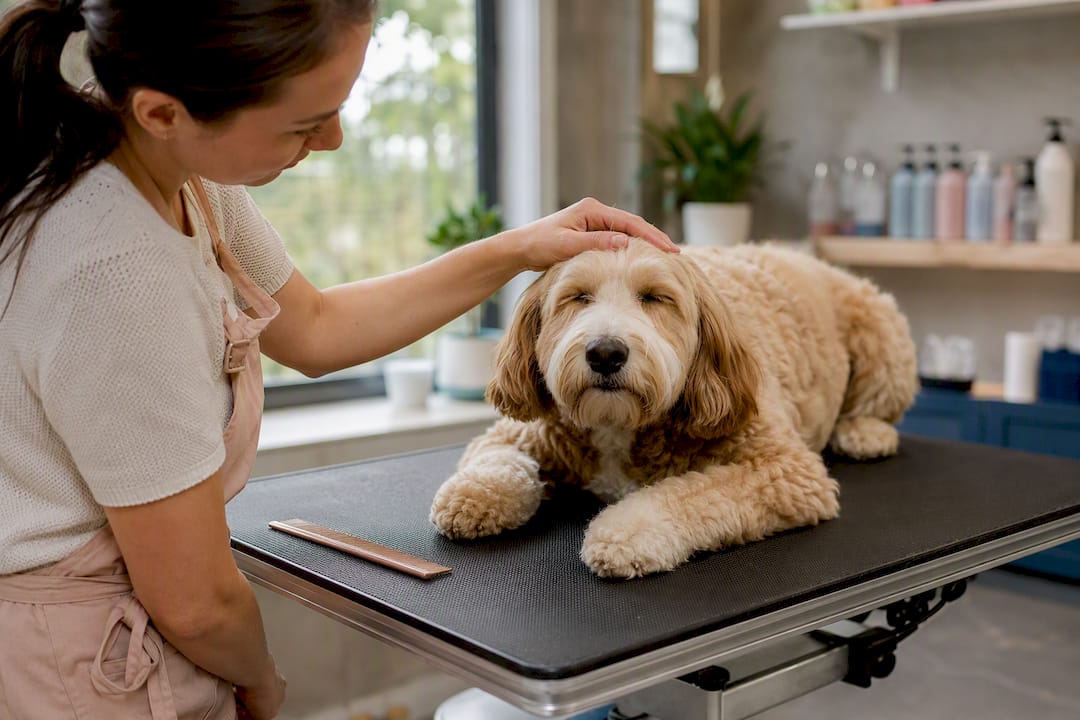

Sedation for dog grooming, in the sense that matters most for anxious pups, means calm, non-pharmacological handling rather than any drug. The immediate step is simple: begin short daily handling sessions at home and choose a cage-free groomer trained in fear-free techniques. Best Friends research backs this approach, and it is the philosophy behind every appointment at The Pampered Pup.
TL;DR:
- Most dogs respond well to gradual, positive reinforcement techniques that involve familiar items, treats, and short, frequent sessions rather than long, stressful appointments.
- Cage-free groomers with open layouts, staggered scheduling, and staff trained to recognize stress signals provide a safer and more comfortable environment for anxious dogs.
- Sedation should be reserved for severe cases and always administered and monitored by a veterinarian due to potential health risks and unpredictable side effects.
- Desensitization progress varies; consistent short sessions and patience help build tolerance, but red flags like panic or aggression indicate the need for veterinary behavioral intervention.
- The practice at The Pampered Pup emphasizes fear-free, pet-paced grooming techniques, avoiding sedation entirely and ensuring every dog moves through the process at their own comfort level.
Table of Contents
- How Sedation-Free Grooming Methods Actually Work
- How Do You Desensitize a Dog for Grooming at Home?
- What Does a Cage-Free, Pet-Paced Groomer Do Differently?
- Preparing for an Appointment: What to Bring and Expect
- When Should You See a Behaviorist Instead of Just Practicing More?
- What Sedation Options Exist for Dog Grooming?
- What Are the Risks of Sedating a Dog for Grooming?
- How Do You Decide Between Sedation and Sedation-Free Grooming?
- How Is Sedation Administered and Monitored During Grooming?
- What Are the Legal and Ethical Rules Around Sedation in Grooming Salons?
- What Does Recovery Look Like After a Sedated Grooming Appointment?
- Our Cage-Free Promise and Training Commitment
- Book a Calm, Sedation-Free Groom With The Pampered Pup
- Sources
- FAQ
How Sedation-Free Grooming Methods Actually Work
Force-free grooming rests on a handful of principles, and once you see them in action, they feel almost obvious. The groomer respects the dog’s threshold rather than pushing through it. Treats pair with every new sensation, from the hum of a dryer to the cold touch of clipper blades. Tools get introduced slowly, one small step at a time, so nothing feels sudden.
This is not just theory. It shows up in how a well-run space actually operates day to day.
- Quieter clippers and dryers reduce startle responses in sound-sensitive dogs.
- Towel drying, rather than a blast of hot air, keeps nervous dogs calmer during bath time.
- Groomers schedule fewer dogs per block so no one feels rushed through the process.
- Breaks are built into longer sessions rather than treated as an interruption.
Fear-free grooming practices like these reduce stress hormones that build up during a fight-or-flight response, and calmer dogs tend to stay calmer at the next visit, too. Over time, a dog who learns that grooming is predictable and gentle needs less coaxing, not more. That is the real payoff: cooperation that grows instead of fading with each visit.
How Do You Desensitize a Dog for Grooming at Home?
Building comfort with brushing, clippers, and nail trims takes patience, but the progression is straightforward. Every session should happen in a quiet space, free of distractions, with a pile of small, high-value treats within reach.
- Start with touch. Rest your hand on your dog’s shoulder, offer a treat, and stop. Repeat this daily until it feels routine rather than remarkable.
- Introduce the brush without brushing. Let your dog sniff it, touch it to the shoulder, then treat. Only after several calm repetitions should you add a single stroke.
- Add clippers with the power off. Let the clippers rest near your dog’s paw, then treat. Gradually work up to turning them on nearby, still without touching fur.
- Practice nail handling in stages. Touch a paw, then treat. Tap a nail, then treat. Hold a nail briefly, then treat. Only trim one nail at a time, always paired with a reward, according to the stepwise guidance from Best Friends.
- Run short simulated salon sessions. Combine brushing, a towel, and background noise like a hair dryer on low, then stop before your dog shows signs of stress.
Watch your dog’s body language throughout. A soft mouth, loose tail, and easy weight shifts mean things are going well. A tucked tail, stiff body, or turned head means it is time to pause.
Pro Tip: Smear a small amount of a dog-safe spread on a lick mat, freeze it, and offer it during nail trims or brushing. The steady licking keeps your dog occupied and calm while you work through each step.
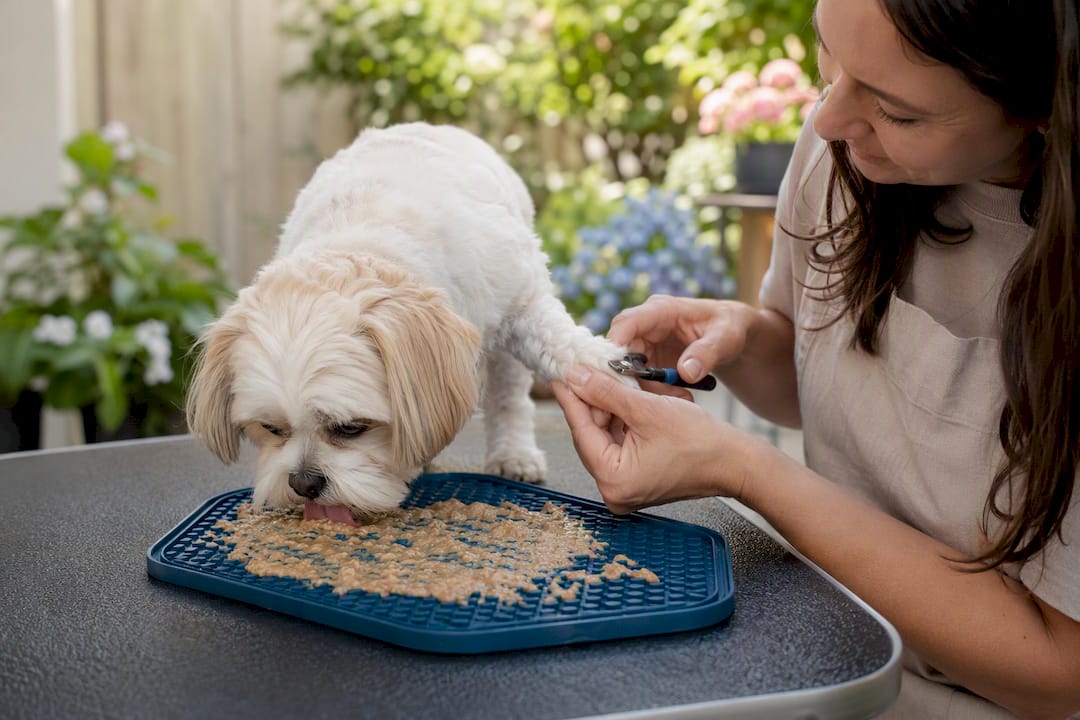
Keep sessions to two or three minutes, several times a week, rather than one long weekly push. Never force a struggling dog through a step. Backing off and returning to an easier stage the next day builds far more trust than powering through ever will.
What Does a Cage-Free, Pet-Paced Groomer Do Differently?
A cage-free groomer replaces confinement with supervision. Instead of waiting in a kennel between steps, your dog moves through an open, staffed area where a trained groomer can watch body language continuously and adjust pace on the fly.
Look for these features when you visit or call a prospective groomer:
- An open floor plan with no kennels or cages, only supervised space.
- Staggered scheduling so groomers work with one dog at a time rather than juggling several.
- Staff trained specifically in reading canine stress signals and de-escalating gently.
- Quieter equipment and a willingness to pause mid-groom for a breather.
Cage-free setups work best with careful supervision and thoughtful matching of temperaments, so it is fair to ask a groomer how they handle an anxious dog specifically, and whether a nervous pup can visit first just to look around before any tools come out.
The Pampered Pup was built around exactly this model. Every dog moves through our open, supervised space at their own pace, never rushed and never caged. The Pampered Pup Grooming Academy train every groomer on our team in these same fear-free techniques, so the calm approach you see on your first visit is the standard for every visit after.
Preparing for an Appointment: What to Bring and Expect
A little preparation in the days beforehand makes the actual appointment far smoother. Practice a short handling session daily in the week leading up to it, and if your groomer allows it, stop by for a brief, no-grooming visit so your dog can sniff around and leave with a treat. Positive practice visits like this build a nonthreatening association with the space itself.
On the day of the appointment:
- Bring a favorite treat, a familiar toy or piece of bedding, and any notes on medical needs.
- Tell your groomer about specific triggers, sound sensitivities, or sore spots.
- Expect a warm-up period at arrival before any tools come out.
- Expect the groom to happen in stages, with breaks between brushing, bathing, and trimming.
A tidy-up trim often runs shorter than a full groom, and total time depends heavily on coat condition, so a well-maintained dog between grooms typically has an easier, quicker visit.
When Should You See a Behaviorist Instead of Just Practicing More?
Graded exposure works for most dogs, but not every case resolves with practice alone. Watch for red flags: repeated panic that does not ease with slower steps, aggression toward handlers, or real injury risk to your dog or your groomer.
If you see these signs, the next step is a certified applied animal behaviorist or a veterinary behaviorist, not more solo repetition. Bring video of your dog’s reactions during handling attempts. It gives the professional real information to work from, and coordinating a staged plan between that specialist and your groomer often gets better results than either working alone.
What Sedation Options Exist for Dog Grooming?
Some dogs, despite consistent desensitization work, still struggle enough that a veterinarian may discuss pharmaceutical options as a separate path from anything a grooming salon provides. These conversations belong entirely between you and your veterinarian, not a groomer, and they typically follow a full health screening first.
Options a veterinarian might consider range from mild oral anti-anxiety medication given before an appointment to short-acting injectable sedation administered and monitored in a clinical setting. Neither category is something a cage-free grooming salon like The Pampered Pup provides or recommends, since we are not a veterinary practice.
What we can say with confidence, grounded in fear-free grooming research, is that many dogs who seem impossible to groom respond well to the graded, pet-paced techniques outlined earlier in this guide. Fear-free scheduling and handling practices resolve a meaningful share of what pet owners assume requires medication. That is why our approach starts with patience and pacing, not pharmacology, and why we encourage a conversation with your veterinarian before assuming sedation is the only route forward.
What Are the Risks of Sedating a Dog for Grooming?
Any sedative or anti-anxiety medication carries physiological risk, which is exactly why that decision sits with a veterinarian who knows your dog’s health history, not with a grooming appointment.
Risks can include changes in heart rate or blood pressure, unpredictable reactions in dogs with underlying heart or respiratory conditions, and recovery time that varies by dog and by dose. Older dogs, brachycephalic breeds, and dogs with existing medical conditions typically carry higher risk profiles, which is part of why a full veterinary evaluation always precedes any sedation decision, regardless of how mild the case seems.
This is also part of why The Pampered Pup leans so heavily on sedation-free methods. A slower, staged grooming session carries none of those physiological risks, and for the vast majority of anxious dogs, patience gets the job done just as well.
How Do You Decide Between Sedation and Sedation-Free Grooming?
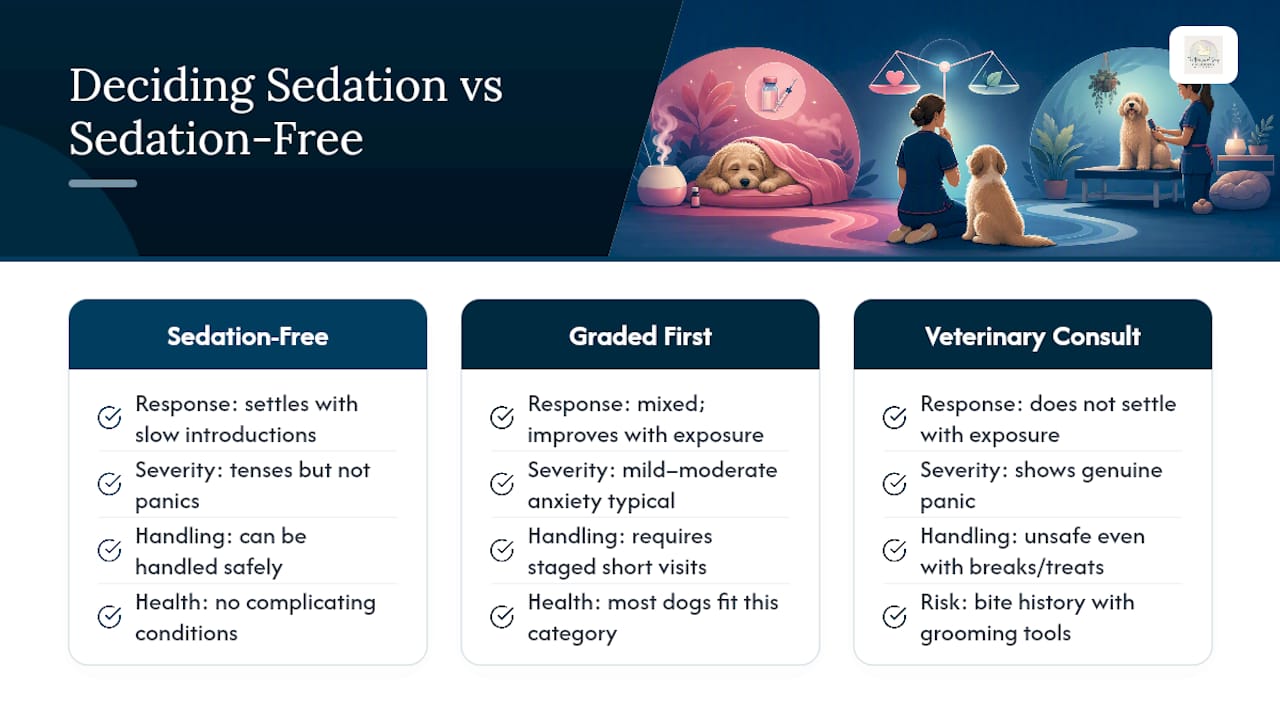
The deciding factors are health, severity, and response to graded exposure, not convenience. A dog who tenses but ultimately settles with slow introductions and treat pairing is a strong candidate for sedation-free grooming, full stop.
A dog who shows genuine panic, who cannot be safely handled even with breaks and treats, or who has a bite history around grooming tools is in different territory, and that conversation belongs with a veterinarian and possibly a veterinary behaviorist together. Age, underlying health conditions, and how a dog has responded to previous grooming attempts all factor into that veterinary decision.
For everyone in between, and that is most dogs, the graded, cage-free approach described throughout this guide is worth trying first, ideally with a groomer willing to stage the process across a few short visits rather than one long ordeal.
How Is Sedation Administered and Monitored During Grooming?
When a veterinarian does prescribe sedation for a grooming appointment, administration and monitoring happen under clinical protocols, typically before your dog ever arrives at a grooming appointment or in a veterinary setting itself.
That includes checking vital signs, calculating dosage based on weight and health status, and observing recovery time before the dog is cleared for handling. None of this falls within what a cage-free grooming salon does or should do. Reputable groomers, including our team at The Pampered Pup, will ask about any medication your dog has received recently, since it affects how we pace a visit, but administering or monitoring sedation is squarely a veterinary responsibility.
What Are the Legal and Ethical Rules Around Sedation in Grooming Salons?
Regulations on this vary by location, but the ethical line is consistent across the industry: grooming salons that are not veterinary practices should not be administering sedative medications. Doing so would cross into veterinary practice, which requires licensing that a grooming business does not hold.
Ethically, reputable salons draw a clear boundary here, and that boundary is one reason cage-free, fear-free grooming has grown in popularity. It gives owners of anxious dogs a path that does not depend on medication at all. The Pampered Pup operates entirely within that boundary. If a dog’s anxiety seems to exceed what graded handling can resolve, we will say so plainly and encourage a veterinary conversation rather than attempting a workaround.
What Does Recovery Look Like After a Sedated Grooming Appointment?
If your veterinarian has sedated your dog for a procedure connected to grooming, recovery guidance will come directly from that veterinarian, since it depends on the specific medication and dose used. General good practice includes a quiet space at home, access to water, and close observation for several hours afterward.
Watch for unusual grogginess that persists well beyond what your veterinarian described, loss of appetite, or any breathing changes, and call your veterinarian if you notice them. This is squarely a veterinary care topic, and any specific concern about your dog’s recovery belongs with the clinic that provided the sedation, not a grooming appointment.
Our Cage-Free Promise and Training Commitment
We built The Pampered Pup around one idea: grooming should never require a cage or a rushed schedule to feel safe. Every dog moves through our open, supervised space at a pace that suits them.
The Pampered Pup Grooming Academy exists so every groomer on our team learns the same fear-free, pet-paced standards, not just a few. If you have a puppy having a first groom or a senior dog with sensitive joints, we welcome your questions, and we are glad to schedule a short acclimation visit before the real appointment.
— Martha Traweek
Book a Calm, Sedation-Free Groom With The Pampered Pup
For a dog who tenses at the sound of clippers, the alternative to sedation is a groomer who never needs it in the first place. The Pampered Pup gives Mobile, Daphne, Spanish Fort, and Fairhope families exactly that: an open, cage-free space where your dog is groomed at their own pace, with breaks built in and no kennel confinement between steps.
Our full grooms, tidy-up trims, and bath and brush services all follow the same fear-free principles, and our puppy and senior grooming programs are built for dogs who need extra patience. New clients can start with the $19 Pampered Pup Package to see how our pace-first approach feels before committing to a full service.
Early drop-off is available from 7:30 AM Tuesday through Friday and 8:30 AM on Saturday, which gives your dog a quiet head start before the day gets busy. Book online today or call us at 251-776-2104, and let’s plan the gentlest possible visit for your best friend.
Sources
- How to help dogs tolerate grooming and vet handling — Best Friends
- Calm, fear-free grooming for anxious dogs — Good Dog
- The pros and cons of cage-free grooming — Animal Behavior College
FAQ
Does The Pampered Pup Use Sedation During Grooming?
No. The Pampered Pup uses cage-free, pet-paced handling and fear-free techniques instead of any sedative medication, and our Grooming Academy trains staff specifically in these methods.
Do Groomers Sedate Dogs Themselves?
Reputable grooming salons do not administer sedative medications, since doing so requires veterinary licensing. Any sedation decision belongs to a veterinarian who can evaluate your dog’s full health history.
Is Sedation Safe for Dogs During Grooming?
Sedation carries real physiological risks, including changes in heart rate and unpredictable reactions in dogs with existing health conditions, which is why it should only be considered under direct veterinary supervision.
How Long Does It Take to Desensitize a Dog to Grooming Tools?
It varies by dog, but short daily sessions following the stepwise approach recommended by Best Friends often build meaningful tolerance over time.
What Should I Look for in a Sedation-Free Groomer?
Look for an open, cage-free layout, staggered scheduling, quieter equipment, and staff trained in reading canine stress signals, all features built into how The Pampered Pup operates every appointment.
Recommended
- Puppy & Senior Dog Grooming in Mobile, AL | The Pampered Pup
- Dog Grooming in Mobile, AL | Cage-Free Groomer | The Pampered Pup
- Beyond the Brush: Why Grooming Is Essential for Your Pet’s Well-Being | Mobile, AL
- Contact & Book a Dog Groomer in Mobile, AL | The Pampered Pup
Want a hand with this? We're a cage-free, pet-paced grooming salon on Oak Circle Drive East in Mobile, AL, with early drop-off from 7:30 AM Tuesday through Friday (8:30 AM Saturday). Book online or call 251-776-2104 and we'll build a plan around your dog.